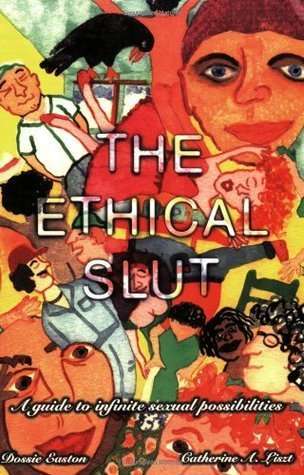
The Ethical Slut: A Guide to Infinite Sexual Possibilities
What This Book Actually Does
If you’ve spent any time in non-monogamous circles, someone has handed you this book. The Ethical Slut by Janet W. Hardy and Dossie Easton has sold over 200,000 copies since its first edition in 1997, and it’s been called “the poly bible” so many times the phrase has lost all meaning. Now in its third edition (2017, Ten Speed Press), the book lays out a framework for consensual non-monogamy that covers everything from managing jealousy to negotiating boundaries to figuring out what you actually want in the first place.
The central argument is pretty straightforward: there’s nothing inherently wrong with having multiple sexual or romantic partners, as long as everyone involved is honest about it. Hardy and Easton introduce the concept of a “starvation economy” of love. The idea that most of us grow up believing there’s a limited supply of affection and attention, and that giving some to one person means taking it from another. The book pushes back on that assumption hard.
It’s a genuinely useful book. It’s also a flawed one. Both things are true at the same time.
Where the Book Falls Short
Here’s the thing about The Ethical Slut that nobody tells you before you read it: it’s written from a very specific perspective, and it doesn’t always acknowledge that. The authors present their version of non-monogamy as a kind of enlightened lifestyle, and monogamy gets framed as something you do because culture told you to, not because you chose it freely. That rubs a lot of readers the wrong way, and honestly, it should.

A few specific problems worth knowing about:
- Jealousy gets oversimplified. The book tells you jealousy is natural, then spends most of its energy treating it like a problem you can think your way out of. The responsibility lands almost entirely on the person feeling jealous, with very little attention paid to what a partner might be doing to make things worse. If you’ve ever been told “that’s your jealousy to deal with” by someone using this book as a playbook, you know how that can go sideways.
- The success stories are a bit too tidy. The book’s examples hit rough patches that tend to resolve neatly. There aren’t many stories where things genuinely fell apart, where someone got hurt and it didn’t get better. That creates an overly rosy picture of how non-monogamy works in practice.
- Cultural context is mostly absent. The earlier editions especially wrote as if everyone has equal access to sexual health resources, community support, and the freedom to be openly non-monogamous. That’s just not reality for a lot of people. The third edition has made some effort here, including material on Black polyamorous activism and gender variance, but the book’s default perspective is still pretty narrow.
- Compersion can become a weapon. The book introduces compersion (feeling happy about your partner’s other relationships) as an ideal to work toward. But in practice, the concept sometimes gets used to shame people who are struggling. “Why can’t you just feel compersion?” is a real thing people say to their partners, and the book doesn’t do enough to push back on that misuse.
None of this makes it a bad book. But going in with your eyes open about these limitations makes it a more useful read, not less.
Key Concepts Worth Paying Attention To
Even with its blind spots, The Ethical Slut introduces several ideas that have genuinely changed how people think about relationships and intimacy:
- The starvation economy vs. the abundance model. The idea that love isn’t a finite resource. You don’t have less to give one person because you’re also giving to another. This reframe alone is worth the cover price for a lot of readers.
- Consent as ongoing conversation. Not a one-time checkbox, but something you keep checking in about. The book is solid on this point.
- Boundary negotiation as a skill. Practical exercises for figuring out where your actual limits are, not just where you think they should be.
- Jealousy as information. When the book is at its best, it treats jealousy not as something to eliminate but as a signal that something needs attention. The exercises around unpacking what jealousy is actually telling you are genuinely helpful.
- Chosen family and relationship networks. The book was ahead of its time in recognizing that relationships don’t have to follow a hierarchy, and that the people you choose to build your life around matter as much as biological family.
How It’s Structured
The book is organized into four parts. The first covers the philosophical groundwork: what ethical non-monogamy means, how to examine your assumptions about sex and relationships, and why the authors think sexual freedom is worth pursuing. Part two gets into the practical skills, including communication, jealousy management, and conflict resolution. Part three addresses specific relationship configurations like triads, quads, and open marriages. The final section, “Sluts in Love,” gets into sexual practices and the day-to-day reality of maintaining multiple connections.
Each section includes exercises you can do alone or with partners, from journaling prompts to structured conversations. Even if you disagree with some of the philosophical positions, the practical tools for talking honestly about what you want are solid.
Who This Book Is Actually For
The Ethical Slut gets recommended to everyone, but it’s most useful for people who are early in their thinking about non-monogamy. If you’re in a monogamous relationship and one or both of you are curious about opening up, it’s a reasonable starting point. If you’re single and interested in building a non-monogamous life from scratch, there’s useful material here.

It’s less useful if you’re already well into practicing non-monogamy and looking for nuanced guidance on the harder questions. Like, what do you do with a partner’s new relationship energy when you’re going through a rough patch? Or when a boundary you set three months ago isn’t working anymore? For that level of complexity, you’re probably better served by books like Polysecure or working with a therapist who actually understands these relationship structures.
The book is also genuinely helpful for people in monogamous relationships who want better communication tools. And for queer folks sorting out what relationship structures actually fit their lives. A lot of what Hardy and Easton teach about negotiation, consent, and emotional honesty applies regardless of how many people are involved.
About the Authors
Dossie Easton is a licensed Marriage and Family Therapist based in San Francisco, specializing in alternative sexualities, non-traditional relationships, and trauma recovery. She’s been practicing since 1991, with graduate work from the University of San Francisco. Easton committed to an open sexual lifestyle in 1969 and taught her first workshop on unlearning jealousy in 1973, which gives her roughly five decades of hands-on and clinical experience with the material she writes about.
Janet W. Hardy is a writer, sex educator, and founder of Greenery Press (which published the book’s first edition under Hardy’s pen name, Catherine A. Liszt). She and Easton have co-authored five books together on relationships, BDSM, and sexuality. The two met in 1992 through the Society of Janus, a San Francisco BDSM education organization.
Having one author who is a practicing clinician and one who is an educator and publisher gives the book a useful dual perspective. Easton brings the clinical grounding; Hardy makes sure you can actually read the thing without a graduate degree.
The Third Edition: What Changed
The 2017 update reworks the book to address twenty years of cultural shifts. The third edition adds material on dating apps, gender variance and trans inclusion, Black polyamorous activism, updated consent language, and new conflict resolution tools.
The changes are welcome, though the updates still feel half-measured to some readers. The book’s core perspective still reflects its origins in 1990s San Francisco queer and kink communities. That’s both its strength (real lived experience) and its limitation (a particular slice of lived experience).
Further Reading
If The Ethical Slut gets you thinking, these books pick up where it leaves off in important ways:
- Polysecure by Jessica Fern goes deeper into how your attachment style shapes your experience of non-monogamy. It fills the gap that The Ethical Slut leaves around why some people struggle more than others with jealousy and insecurity.
- More Than Two by Franklin Veaux and Eve Rickert is more structured and practical, with specific frameworks for decision-making in polyamorous relationships.
- Opening Up by Tristan Taormino takes a more research-based approach and includes a wider range of non-monogamous relationship styles.
- Building Open Relationships by Dr. Liz Powell is a workbook-style guide that pairs well with The Ethical Slut‘s exercises.
- Polywise by Jessica Fern and David Cooley digs into the more advanced challenges that come up after you’ve been doing this for a while.
If you’re working through questions about non-monogamy and want support from someone who’s actually worked with poly clients, therapy with a poly-aware clinician can make a real difference. You can also reach out directly to find a good fit.