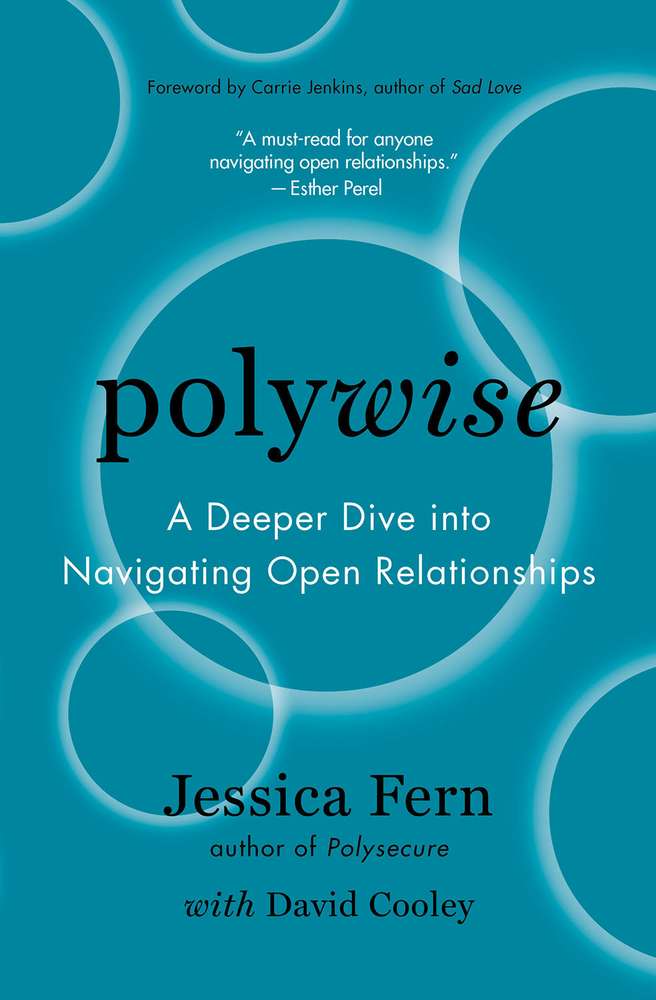
Polywise: A Deeper Dive into Navigating Open Relationships
Managing multiple loving relationships takes a different set of tools than what most relationship advice gives you. For people doing ethical non-monogamy (ENM) or polyamory, the big question is usually: how do my attachment patterns affect what’s happening across all my partnerships? Jessica Fern’s “Polysecure” is one of the first books to take that question seriously by applying attachment theory directly to non-monogamous relationship structures.
If you’re looking for ethical non-monogamy therapy, you’ve probably run into therapists who don’t really get poly dynamics, or who treat your relationship choices as the problem. Fern’s book gives you a framework and a vocabulary that’s actually built for your situation, whether you’re working with a therapist or sorting things out on your own.
Attachment Theory That Actually Fits Non-Monogamy
Most attachment resources assume monogamy as the baseline, which leaves poly folks doing a lot of mental translation. Fern skips that step. She looks at how early attachment patterns show up specifically in polyamorous relationships, and she does it without pathologizing non-monogamy the way some attachment theorists have.
Here’s the thing that clicks for a lot of readers: you might feel totally grounded with one partner and completely unmoored with another. Fern explains that this isn’t a contradiction or a sign that something’s wrong. Your attachment system responds differently to different people and different dynamics, and understanding why gives you something to actually work with.
The HEARTS Framework: Something You Can Actually Use
Therapists who work with poly clients tend to find Fern’s HEARTS framework genuinely useful. It gives you concrete ways to build security across multiple relationships:
Here to stay: Making commitment clear in ways that fit each specific relationship. Expressed delight: Showing up with genuine enthusiasm, not just going through the motions. Attunement: Staying emotionally tuned in across partnerships. Rituals and routines: Building patterns that give each relationship its own identity. Turning toward after conflict: Repair work that accounts for multiple relationships being affected. Secure attachment with self: Developing your own internal stability so no single relationship has to carry all the weight.
It’s a framework, not a prescription. Take what works.
Where Theory Meets Tuesday Night
The book is at its best in the real-world examples. When your nesting partner starts seeing someone new and your brain knows you’re supportive but your body is in full alarm mode, Fern doesn’t just label that jealousy. She identifies it as an attachment activation and offers specific strategies for working through it. That distinction is more than academic; it changes how you respond.
For people trying to figure out the difference between various ENM structures, the attachment lens helps too. You might be fine with a partner having casual hookups but feel activated when emotional intimacy enters the picture. Understanding that through attachment theory helps you design agreements that actually match your needs instead of what you think you should be comfortable with.
Working With a Therapist on This Material
The book works well as a companion to therapy rather than a replacement for it. Clients who come in having read “Polysecure” usually have better vocabulary for what they’re experiencing, which speeds up the work. Poly-informed therapists can help you personalize the frameworks to your specific constellation and history.
Honest Limitations
The book doesn’t go deep enough on how systemic factors shape attachment and relationship security. If you’re from a marginalized community, the social pressures on your relationships are different in ways the book doesn’t fully account for. It also leans toward the experience of people coming from monogamy into polyamory, which can feel like it’s ignoring people who’ve been doing non-monogamy their whole lives.
Some therapists point out that the framework assumes a baseline of emotional resources and support that not everyone has. If you’re in the middle of significant trauma work or a major relationship crisis, you’ll likely need more support than the book alone provides.
About Jessica Fern
Fern is both a therapist who works with poly clients and someone who practices polyamory herself. That combination of clinical knowledge and personal experience shows in the writing. She knows the research and she knows what it feels like at 2 AM when your partner is on a date and your attachment system is going haywire. Her background in trauma-informed care strengthens the book’s approach to working with attachment wounds.
Getting Started With These Ideas
Begin by mapping your own patterns. Where do you feel settled in your relationships? Where do you get activated? Talk to your partners about the HEARTS framework and see which elements feel most relevant. A lot of people find that just having language for their experience is half the battle.
For deeper work, a therapist who understands poly relationships can help you connect these concepts to your specific history and current situation.
More Reading
If you want to keep exploring, try “The Smart Girl’s Guide to Polyamory” by Dedeker Winston for practical day-to-day advice, “Opening Up” by Tristan Taormino for a broader ENM overview, or “Stepping Off the Relationship Escalator” by Amy Gahran for questioning relationship assumptions. Find it on OpenLibrary here.