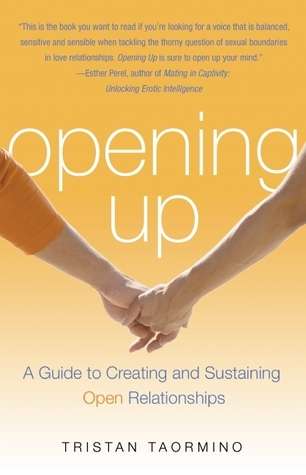
Opening Up: A Guide to Creating and Sustaining Open Relationships
If you’re thinking about opening up your relationship, or you’re already in some form of non-monogamy and looking for a guide that actually covers the basics, Tristan Taormino’s book is one of the first places most people land. Whether you’re working with a polyamory-friendly therapist or just starting to question the “one person forever” script, this is a solid starting point – with some real caveats.
Why This Book Matters for Modern Relationships
Taormino breaks down the many ways people structure consensual non-monogamy, from occasional dating to long-term polyamorous partnerships. Her explanations are clear and practical, showing how different approaches can work for different people without being preachy about any one model.
About the Author and Her Perspective
Taormino is a sex educator and relationship coach who interviewed over 125 people in various forms of open relationships for this book. That’s a real strength – you’re getting real stories, not just theory. Her background is more in sex education than mental health or attachment theory, though, which shapes where the book puts its emphasis. There’s a lot on the sexual logistics and less on the emotional deep-dive.
Important Context and Critiques
This book was written in 2008, and it shows. The language around gender and sexuality feels dated, especially when it comes to trans experiences and bisexuality. There’s a pattern of only mentioning race when interview subjects aren’t white, which is worth noticing. The book leans heavily on hierarchical relationship models and veto power – ideas that a lot of people in poly communities now push back against. And the focus tilts more toward sexual connections than emotional ones, which might leave you wanting if you’re looking for help with the harder relational stuff.
Practical Tools for Communication
Where the book really earns its keep is the communication frameworks. Even with its blind spots, Taormino gives you real language for hard conversations – how to set boundaries, how to build agreements that actually hold up, how to say what you need without it turning into a fight. These tools are genuinely useful regardless of when the book was published.
Dealing with the Hard Parts
The book tackles jealousy, time management, and the question of who to tell and when. Some of the advice can feel a bit surface-level, but it gives you a starting point. If you’re working through any of these in therapy, having Taormino’s frameworks to reference can help move the conversation forward.
Finding Professional Support
A lot of couples find that working with a polyam-friendly therapist makes a real difference when opening up. When you’re looking for someone, it helps to find a therapist who:
- Has specific training in consensual non-monogamy
- Has actually worked with people in different relationship structures
- Doesn’t treat non-monogamy as a problem to fix
- Gets the specific challenges that come with open dynamics
Couples therapy can help at any stage – whether you’re just floating the idea, in the messy middle of opening up, or looking for support in an established open relationship.
That support is especially useful when you’re working through the stuff this book covers: jealousy, communication breakdowns, and the boundary negotiations that come up again and again.
Making the Most of This Resource
Read this alongside newer books that fill in its gaps. Take the communication tools and relationship structures that fit your values, and leave the dated stuff behind. If something in here stirs up a reaction, bring it to your therapist – that’s often where the most useful work happens.
What You’ll Actually Learn
You’ll get practical skills for expressing needs, setting boundaries, and building relationships on trust instead of control. The real-world examples help you see how different structures work in practice, which is more useful than any amount of theory.
For more current takes, check out “Polysecure” by Jessica Fern for the attachment angle, “The Smart Girl’s Guide to Polyamory” by Dedeker Winston for updated frameworks, or “Building Open Relationships” by Dr. Liz Powell for a more contemporary approach.