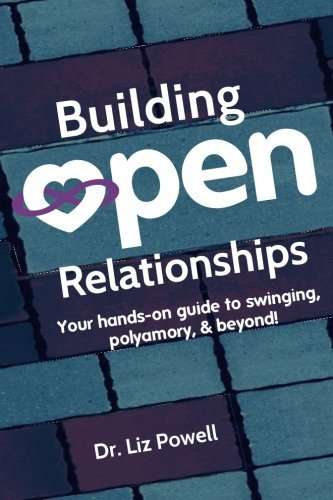
Building Open Relationships: Your hands on guide to swinging, polyamory, and beyond!
If you’re working through the ins and outs of ethical non-monogamy therapy or looking for solid guidance around consensual non-monogamy counseling, Dr. Liz Powell’s “Building Open Relationships” is a practical roadmap through territory that most traditional relationship guides don’t touch. This book stands out among non-monogamy therapy resources by combining clinical expertise with lived experience, bridging the gap between academic understanding and what actually works in real life.
Beyond Theory Into Practice
What sets this book apart from other non-monogamy counseling resources is Powell’s focus on practical application over abstract theory. Instead of getting bogged down in academic definitions or philosophical debates about relationship structures, she gets straight to the skills and tools that make ethical non-monogamy work in practice. The book works as both an introduction for newcomers and a reference for people already in various forms of consensual non-monogamy.
Powell’s approach recognizes that successful non-monogamous relationships need the same foundation as monogamous ones, just with added layers of complexity around communication, time management, and emotional processing. She doesn’t present non-monogamy as better or worse than monogamy, just as a valid choice that takes specific skills and awareness to do well.
The book builds step by step from foundational concepts like consent and communication up to more advanced topics like metamour relationships, managing multiple partners, and handling the inevitable rough patches. Each chapter includes reflection questions and practical exercises that make abstract concepts actionable, so it reads more like a workbook than a passive read.
Emotional Intelligence is the Foundation
One of the book’s biggest strengths is how it handles jealousy, compersion, and the full range of emotions that come up in open relationships. Powell reframes jealousy not as a character flaw to overcome but as useful information about your needs, insecurities, and attachment patterns. This is really the core of what the book is about: emotional intelligence and self-awareness as the bedrock of healthy non-monogamy. Her clinical psychology background shows through in the detailed look at attachment styles and their impact on non-monogamous relationships. Rather than offering quick fixes, Powell guides readers through understanding their own emotional patterns and building skills to work with them. That’s useful well beyond non-monogamy, honestly, for anyone wanting to understand their relationship patterns better.
Powell also addresses compersion, the joy felt when a partner experiences happiness with someone else, without holding it up as some standard everyone should reach. That matters. Emotional responses vary widely between people, and authentic feelings matter more than performing the “right” emotions.
Intersectional Awareness in Practice
Where a lot of relationship guides fall short, Powell does well in addressing how factors like race, disability, gender identity, and class affect non-monogamous relationships. The book explicitly looks at how privilege and systemic inequities shape relationship dynamics, adding depth that’s often missing from similar guides.
This intersectional approach isn’t just theoretical. It’s practical, helping readers see how their social positions might create advantages or challenges in forming and maintaining multiple relationships. Powell asks questions like how coming out as non-monogamous might hit differently depending on someone’s other identities, or how economic privilege affects the ability to maintain multiple relationships.
The author also gets into the reality that non-monogamy communities, like any community, can reproduce harmful patterns around racism, ableism, and other forms of discrimination. That honest look helps readers engage with these communities more thoughtfully while working to make them more inclusive.
Communication Tools That Actually Work
The communication and conflict resolution sections provide concrete tools that are useful way beyond non-monogamous relationships. Powell offers specific language for hard conversations, frameworks for setting boundaries, and methods for working through conflict constructively. The tools come from clinical training but are written for a general audience.
Instead of vague advice about “communicating better,” the book gives scripts and conversation frameworks for situations common in non-monogamous relationships. Whether you’re discussing safer sex practices with multiple partners, working out time and attention, or addressing jealousy when it flares up, Powell offers language you can actually use.
The emphasis on preparation for tough conversations is especially useful. The book includes worksheets for thinking through challenging topics before raising them with partners, so you can get clear on your own needs and concerns while also considering your partners’ perspectives.
Contemporary Limitations and Evolving Perspectives
While the book is strong, it has its limits. Some sections may already feel a bit dated as conversations around consent, power dynamics, and relationship ethics keep evolving. The focus on individual skill-building is useful but sometimes underplays the role of community support and structural factors in whether relationships actually work.
Powell’s approach, rooted in therapeutic frameworks, sometimes treats relationships as problems to be managed rather than organic connections to be cared for. Some readers may prefer approaches that give more weight to intuition and emotional flow alongside the book’s more systematic methods.
The book also comes from a primarily Western and individualistic perspective on relationships, which may not resonate with readers from cultures that place more value on family, community, or different relationship traditions. While Powell addresses some intersectional issues, the cultural lens could be wider.
Author’s Unique Perspective
Dr. Liz Powell brings a rare combination of clinical training and personal experience to this topic. As both a licensed psychologist and someone who practices solo polyamory, Powell offers insight that bridges professional expertise with lived understanding. That dual perspective lets the author address both the psychological dynamics and practical realities of non-monogamous relationships.
Powell’s identity as a solo polyamorous person, someone who maintains multiple relationships without seeking a primary partnership or cohabitation, gives representation to a relationship style that’s often overlooked in mainstream discussions. That perspective adds real depth to the book’s exploration of different ways to structure intimate connections.
Working With This Book
For those working with an ethical non-monogamy therapist or seeking non-monogamy relationship counseling, this book is a strong addition to professional support. The worksheets and reflection exercises work well in therapy sessions, helping clients get clearer about their needs and concerns.
The book can be a shared resource for partners exploring non-monogamy together, giving you a common language and frameworks for important conversations. But it’s just as useful for individuals doing their own relationship exploration, whether or not they’re currently partnered.
Think of the book as a starting point rather than the final word. Use Powell’s frameworks while adapting them to your own values, circumstances, and relationship goals. The book’s strength is in helping you develop your own relationship philosophy rather than handing you a set of rules to follow.
Expanding Your Understanding
While “Building Open Relationships” covers practical skills, you may want to supplement with resources that offer different angles. Books on specific relationship structures, cultural approaches to non-monogamy, or feminist critiques of traditional relationship models can broaden your perspective.
If you’re interested in the intersection of non-monogamy and social justice, look for resources by authors from diverse backgrounds to expand beyond the primarily white, middle-class perspective that dominates most of the published work on this topic.
Find it on Open Library here.