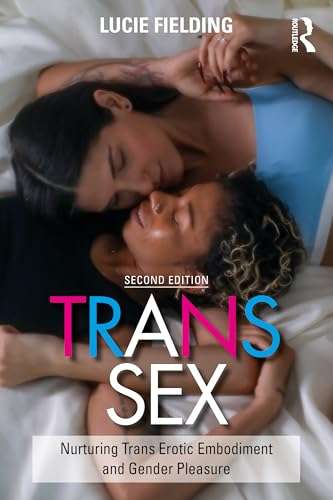
Trans Sex: Nurturing Trans Erotic Embodiment and Gender-Pleasure in the Body
For trans and gender expansive people working out sexuality, pleasure, and embodiment, finding affirming resources can feel like searching for a map that doesn’t exist yet. The second edition of Trans Sex: Nurturing Trans Erotic Embodiment and Gender-Pleasure in the Body is that map, a radically reimagined guide that centers joy, pleasure, and possibility rather than loss or limitation.
A New Way of Thinking About Trans Sexual Health
What makes this book different in the world of gender affirming care is its fundamental shift in the conversation. Instead of focusing on resolving gender dysphoria or preserving pre-transition sexual function, author Lucie Fielding introduces the concept of “gender-pleasure,” the idea that bodies can be sources of erotic joy because of, not in spite of, their transness.
This pleasure-positive approach to trans sexuality pushes back against the medical model that has dominated conversations about transgender health for too long. For years, discussions of trans sexual health have been about what’s lost during transition or how to maintain “normal” sexual function. Fielding flips that on its head, asking instead: What new forms of pleasure become possible? How can trans people develop erotic embodiment that celebrates rather than just tolerates their bodies?
The book is grounded in social justice, somatics, and queer theory. It’s intellectually serious and practical at the same time. This isn’t abstract theory; it’s a roadmap to reclaiming pleasure in bodies that have been pathologized, medicalized, or treated as problems to solve.
Who This Book Is For
Trans Sex speaks to multiple audiences and does it well. Mental health professionals and medical providers working with trans clients will find new ways to move beyond dysphoria-focused care models. The book gives tools to become what Fielding calls “more imaginative, ethically curious providers,” practitioners who can hold space for the full range of trans erotic experience.
For trans and gender expansive people themselves, this book offers something deeper: permission and pathways. Permission to explore pleasure without shame. Permission to define sexuality on your own terms. And concrete pathways to “queer sex” and discover what Fielding describes as “the polymorphous perversity of our bodies.”The inclusion of experiential activities and vignettes makes abstract concepts concrete. Readers aren’t just told about gender-pleasure; they’re given practical exercises to explore it in their own lives. The final chapter features contributions from multiple trans and gender expansive authors working at the intersections of sexuality and gender adds crucial diversity of perspective and lived experience.
Beyond the Binary of Dysphoria and Function
One of the book’s most important contributions is its challenge to how gender-affirming care is typically framed. Traditional approaches often treat transition as a medical intervention to reduce suffering, necessary but fundamentally about managing something negative. Sexual health conversations in that context become about damage control: preserving erectile function, maintaining fertility, or dealing with the “side effects” of hormone therapy on libido.
Fielding doesn’t dismiss those concerns but refuses to let them define the whole conversation. Instead the book asks: What if we treated trans sexuality as a chance for discovery rather than a problem to manage? What if transition opened doors to new kinds of pleasure instead of closing them?
This reframing has real implications for both therapy and self-understanding. When trans people get frameworks to explore gender-pleasure rather than just manage gender dysphoria, entirely new possibilities open up. Bodies become sources of joy rather than sites of distress. Sexuality becomes something to explore rather than just preserve.
Practical Applications for You
For trans people exploring their sexuality, this book offers a way to move beyond survival mode into actually thriving. The experiential activities give real starting points to reconnect with the body, explore pleasure, and develop what Fielding calls “erotic embodiment.” These aren’t quick fixes but invitations to a longer process of discovery and self-definition.
Therapists and healthcare providers can use this book to broaden their understanding of gender-affirming care beyond the medical model. The concepts here, particularly gender-pleasure, give new language for conversations with trans clients about sexuality, embodiment, and quality of life. The book asks providers to be more creative and curious in their work, to move past standardized protocols toward genuinely individualized care.
Partners and allies of trans people will find real insight into the complexity of trans sexuality and why pleasure-centered approaches matter. Understanding these frameworks can help create more affirming and supportive intimate relationships.