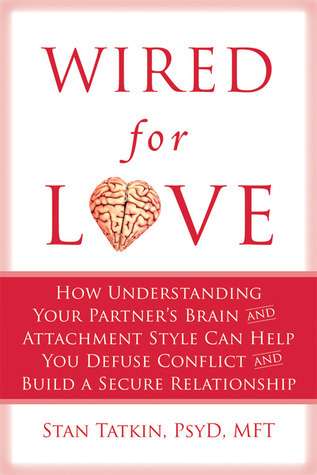
Wired for Love: How Understanding Your Partner’s Brain and Attachment Style Can Help You Defuse Conflict and Build a Secure Relationship
Most books about relationships talk about feelings. This one talks about brains. “Wired for Love” by Stan Tatkin is the couples book that therapists actually hand to each other, and there’s a reason it lands differently than the pop-psychology attachment titles crowding the self-help shelves.
Tatkin is a clinician and researcher who developed the PACT model (Psychobiological Approach to Couple Therapy), which sounds like a mouthful but basically means: your relationship problems live in your nervous systems, not just your communication skills. He teaches at UCLA, runs a training institute for couples therapists, and has spent decades studying what happens between two brains when they try to build a life together. His newer book In Each Other’s Care extends the framework further, but this is where it all started.
What Sets It Apart
Where a lot of attachment books stop at labeling (“you’re anxious, they’re avoidant, good luck”), Tatkin starts with the neuroscience of what’s actually happening when two people collide. He introduces three relational styles (anchors, islands, and waves) which roughly map onto secure, avoidant, and anxious attachment. But the language shift matters. “Island” feels different than “avoidant.” Less pathological. More descriptive.
The real contribution is the concept of the “couple bubble.” It’s the idea that two people in a committed relationship create a mutual pact: I protect you, you protect me, we are each other’s go-to person. When the couple bubble is functioning, both partners’ nervous systems can actually settle down. Conflict becomes less threatening because there’s a fundamental sense of safety underneath it. When it’s not functioning, every disagreement activates the threat system and you end up fighting about dishes when you’re really fighting about whether this person is safe.
Tatkin grounds all of this in neuroscience without getting too lost in the weeds. He explains how the amygdala hijacks the prefrontal cortex during arguments, why morning routines matter for relational security, and how partners who learn to read each other’s nonverbal cues can de-escalate conflict before it spirals. It’s practical in ways that feel genuinely actionable.
Where It Gets Tricky
Tatkin’s framework assumes a pretty specific relationship model. Two people, committed, building a shared life together. If you’re in a polyamorous or ethically non-monogamous relationship, the “couple bubble” concept needs significant adaptation. The book doesn’t address how secure functioning works across more than two people, or how the principles translate when your attachment system involves multiple partners with different needs and different nervous system patterns.
The writing style can also be a barrier. Tatkin sometimes uses case studies that feel a little too neat — the couple who fights about X, learns technique Y, and everything clicks into place by the end of the chapter. Real relationships are messier than that, and the examples occasionally make the approach seem simpler than it actually is in practice.
There’s also a risk of the framework becoming prescriptive about what “good” partnership looks like. The couple bubble concept centers mutual dependence as the goal, which is healthy for a lot of people but can feel suffocating for others. Not everyone thrives in a cocoon-style partnership, and that’s not a sign of relational failure. Some people need more autonomy than the book seems comfortable with.
The Couple Bubble in Practice
The most useful sections are the ones about daily rituals and micro-moments. Tatkin argues that how you greet each other, how you say goodbye in the morning, and how you handle transitions (coming home from work, getting into bed) are where relationships are actually built or eroded. Not the big dramatic conversations, but the small repeated moments where you either signal “you matter to me” or “I’m somewhere else right now.”
He calls these “maintenance” behaviors, and the framework gives couples concrete things to try: make eye contact when your partner walks in the door, lead with physical contact before launching into logistics, check in before bed even when you’re exhausted. None of this is revolutionary on its own, but strung together it creates a pattern of nervous system co-regulation that changes how conflict lands when it inevitably shows up.
The conflict sections are strong too. Tatkin’s approach to fighting is less about “use I-statements” and more about understanding what’s happening in your partner’s brain in the first thirty seconds of a disagreement. If you can catch the amygdala activation early and signal safety, the whole trajectory of the argument shifts.
Who Benefits Most From This Framework
The nervous system lens is especially valuable for couples where one or both partners have trauma histories. When your threat detection system is already calibrated high, relationship conflict hits different. Understanding that your partner’s defensive response is neurological, not a character flaw, opens up space for something other than blame. If you’re in couples therapy that draws on PACT or attachment-informed approaches, this book gives you language for what’s happening between sessions.
For LGBTQ+ couples, the couple bubble concept hits a bit differently. Many queer couples didn’t grow up with models for their relationships. Building that container of safety when the outside world isn’t always safe requires intentionality that Tatkin’s framework supports, even if the book doesn’t explicitly address queer relationship dynamics.
For neurodivergent couples, the emphasis on nonverbal cues and nervous system regulation really lands. When one partner processes sensory information or emotional signals differently, the micro-moment framework gives both people something concrete to work with rather than just “communicate better.”
Is This the Right Book for You?
If you want a relationship book that’s grounded in how brains actually work rather than how feelings should ideally go, this is a strong pick. It’s denser than something like “Attached” (which is more of an introduction to attachment theory) but also more useful if you’re willing to sit with the neuroscience.
It works best for couples who are committed and want tools for the daily reality of partnership, not just a framework for understanding why things went wrong. If you’re in a poly or non-monogamous relationship, you’ll need to adapt the concepts. Pairing it with Polysecure helps bridge that gap.
What to Read Alongside This
If “Wired for Love” resonates, these build on similar themes:
Hold Me Tight by Sue Johnson covers attachment-based couples therapy from the Emotionally Focused Therapy angle — a different framework for the same core insight about emotional safety.
Polysecure by Jessica Fern applies attachment theory to polyamorous and ethically non-monogamous relationships, filling the gap that Tatkin’s dyadic framework leaves open.
Mating in Captivity by Esther Perel explores the tension between security and desire in long-term relationships, a different angle on the same question of how intimacy and autonomy coexist.