Unfuck Your Boundaries
The Problem Isn’t That You Don’t Know What a Boundary Is
You know what boundaries are. You’ve read the Instagram posts. You can probably explain the concept to a friend over drinks better than most therapists can in a session. And yet here you are, saying yes to things you don’t want, tolerating behavior that makes your skin crawl, and then lying awake at three in the morning wondering why you can’t just say no like a normal person.
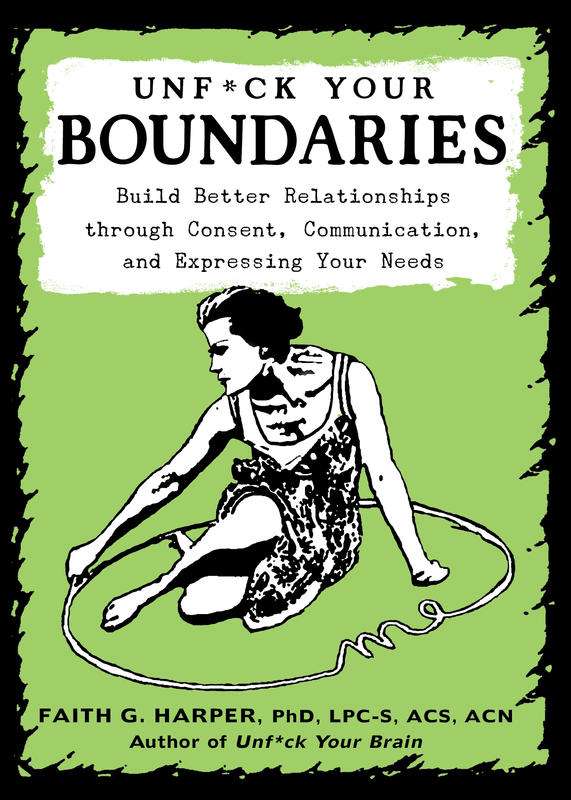
Faith G. Harper, a licensed professional counselor, certified sexologist, and self-described “uppity intersectional feminist” practicing in San Antonio, wrote Unfuck Your Boundaries: Build Better Relationships Through Consent, Communication, and Expressing Your Needs (Microcosm Publishing, 2020) for people who are stuck in that exact gap between knowing and doing. Harper holds a PhD and has built a whole series of “Unfuck Your” books that take clinical concepts and strip out the clinical tone, and this one might be her most practically useful.
What the Book Actually Covers
Harper breaks boundaries into seven categories: physical, property, sexual, emotional-relational, intellectual, spiritual, and time. That taxonomy alone is useful, because most people think of boundaries as one big monolithic thing you either have or you don’t. Turns out you might be great at protecting your time and terrible at protecting your emotional space. Or you hold firm physical boundaries with strangers but dissolve the second a partner pushes back. Just having names for these different categories can be clarifying when everything feels like one undifferentiated mess of “I’m too much of a pushover.”

The book moves through consent, communication techniques, and conflict resolution with a framework she calls BIFF (brief, informative, friendly, firm). There’s a section on recognizing when boundary violations cross the line into abuse, and another on what to do when your own boundaries have been violated and you’re trying to put yourself back together. It’s short, about 190 pages, and reads fast. Harper writes like she’s talking to you across a kitchen table, not lecturing from behind a podium.
Where it gets particularly interesting for anyone in couples therapy or working on relationship dynamics is the way it handles the difference between setting a boundary and issuing an ultimatum. A boundary is about what you will do. An ultimatum is about controlling what someone else does. That distinction trips people up constantly, and Harper is good at making it concrete.
Where It Gets Messy
The casual tone is the book’s biggest strength, and its most common criticism. Harper swears a lot. If you picked up the book, you probably expected that, but some readers find the constant profanity more distracting than disarming after the first few chapters. There are moments where the “I’m your cool friend” voice gets in the way of the actual clinical insight underneath, and you have to do a bit of work to separate the substance from the style.

The other limitation is depth. At 190 pages covering seven types of boundaries plus consent plus communication plus abuse plus recovery, nothing gets the room it really deserves. If you’re dealing with serious boundary violations, especially ones tied to anxiety or trauma responses, this book is a starting point, not an ending point. Harper herself would probably tell you the same thing. She’s a working clinician, not someone who thinks a paperback replaces therapy.
The book is also written primarily for people in relatively straightforward power dynamics. If your boundary struggles are tangled up with being in a polyamorous or non-monogamous relationship where you’re renegotiating agreements with multiple partners, or if your boundary issues are rooted in family systems and cultural expectations that don’t map neatly onto Harper’s framework, you’ll need to adapt what’s here to fit your situation.
Who Should Read This
If you already have a solid understanding of boundary theory and you’re looking for something that goes deep, this isn’t it. But if you’re someone who understands the concept intellectually and keeps failing at the execution, Harper’s direct, no-nonsense approach can shake something loose. The seven-category framework helps you pin down where your boundaries are weakest, instead of just vaguely feeling like you’re bad at all of them.
It pairs well with therapy, particularly if you’re at the stage where you know the patterns but haven’t figured out how to interrupt them in real time. A therapist who understands your specific relationship dynamics can help you practice the skills Harper describes in a way that accounts for the messy specifics of your actual life. Reach out if this is the kind of thing you’d rather work through with someone than just read about.
If you’ve already read this one and want more from Harper, Unfuck Your Anxiety tackles the internal side of why boundaries feel so threatening, and Unfuck Your Intimacy extends the relationship work into sex and dating.