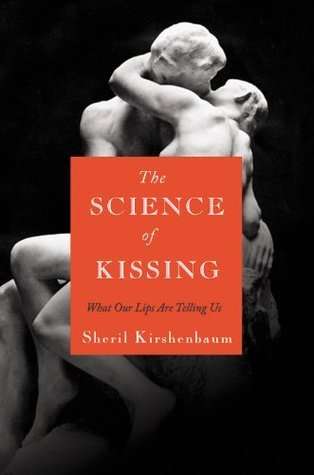
The Science of Kissing: What Our Lips Are Telling Us
A book about kissing shouldn’t need a disclaimer, but this one does: Sheril Kirshenbaum wrote it in 2011 with heterosexual couples as the default, and it shows. The gender chapter is called “Women Are from Venus, Men Are Easy.” If you’re queer, you’ll spend some energy translating.
That said, the biology underneath doesn’t care who you’re kissing. And the biology is worth your time.
What your lips are actually doing
Your lips have more nerve endings per square centimeter than almost any other part of your body. When you kiss someone, those nerve endings fire off a chain reaction: dopamine spikes (that’s the craving), oxytocin releases (that’s the bonding), cortisol drops (that’s the stress leaving). Kirshenbaum walks through the neurochemistry in enough detail to be useful without reading like a textbook.
The part that sticks: kissing isn’t foreplay. It’s its own thing entirely. Couples who keep kissing throughout a long-term relationship report higher relationship and sexual satisfaction. Not because kissing leads to sex, but because the oxytocin release from kissing does its own independent work on attachment and closeness.
If you’re in couples therapy working on physical reconnection, that distinction matters. A lot of couples stop kissing long before they stop having sex. The book gives you a biological reason why that gap feels like something is missing.
The first kiss as a dealbreaker
Here’s a statistic that validates something most people feel but can’t explain: 66% of women and 59% of men have ended a budding relationship after a bad first kiss. People remember up to 90% of the details of their first kiss regardless of how long ago it happened. It’s one of the most vivid memories a person forms.
Kirshenbaum argues this isn’t shallow. When you kiss someone, you’re getting close enough to detect chemical signals related to immune system compatibility. The famous sweaty t-shirt study from 1995 showed that women preferred the scent of men with different MHC genes from their own. Kissing puts you in range for that kind of unconscious assessment.

For clients who feel guilty about ending things over “just a kiss,” this reframing can be useful. Your body was processing real information. Trusting that signal isn’t superficial.
Where the science gets thin
Kirshenbaum is honest about this herself: the field of scientific kissing research barely existed when she wrote the book. Large stretches are anecdotal or borrowed from adjacent fields. Chapter 11 is essentially a list of studies someone should do someday.
The oxytocin framing has also aged. In 2011, calling it “the love hormone” was standard. Since then, research has complicated that picture significantly. Oxytocin’s effects are context-dependent and sometimes contradictory. The book’s neat neurochemical story is a useful simplification, not the full picture.
And the gender binary framing is pervasive. “Men use kissing to escalate to sex, women use it to evaluate partners.” Maybe that’s true on average in heterosexual samples. It tells you nothing about queer intimacy, and it flattens individual variation even within straight relationships. Every chapter about gender differences needs that caveat.
The neurochemistry that actually helps in therapy
Strip away the dated framing and there’s a genuinely useful core here, especially for sex therapy. The science holds up.
The dopamine-anticipation connection: building up to a kiss increases the reward when it happens. That maps directly onto sensate focus exercises where slowing down and building anticipation is the whole point.
The cortisol reduction: kissing measurably lowers stress hormones. For couples where physical touch has become loaded with anxiety or expectation, knowing that even brief kissing can shift your biochemistry gives a concrete reason to start small.
The oxytocin-as-maintenance idea: long-term couples who maintain physical affection, kissing included, show stronger attachment bonds. This isn’t just Gottman saying “fondness and admiration matter.” It’s the biochemistry underneath that principle.
A therapist working on physical reconnection with a couple could assign chapter 10 and 13 as reading. Chapter 10 is the neurochemistry. Chapter 13 is practical, with ten evidence-based suggestions that work as structured homework.

Who this is for and who it isn’t
This is a popular science book. It reads like Malcolm Gladwell or Mary Roach: accessible, entertaining, light on citations. If you want depth, this will frustrate you. Fair warning.
It works best as psychoeducation for someone who responds to understanding the “why” behind physical experiences. If knowing that your brain releases specific chemicals when you kiss helps you approach intimacy with more curiosity and less pressure, this book earns its shelf space.
It doesn’t work for people looking for trauma-informed perspectives on touch, anything about kissing and disability or neurodivergence, or LGBTQ+-specific content beyond the occasional footnote acknowledging that same-sex couples also kiss. The core biology applies regardless of who you’re kissing, but you’ll have to do that translation yourself because the book won’t do it for you.
Skip chapters 2 through 4 unless you’re genuinely curious about bonobo kissing and medieval contract law. Skip chapter 9 (disease transmission) if health anxiety is part of what you’re working on. Go straight to chapters 6, 7, 10, and 13 if you want the parts that matter for relationships.
For a deeper look at how physical and sensory experience connects to therapeutic work, somatic therapy approaches get at what a science book can only describe. And if the couples dimension is what brought you here, couples therapy that includes attention to physical intimacy can put the science into practice.