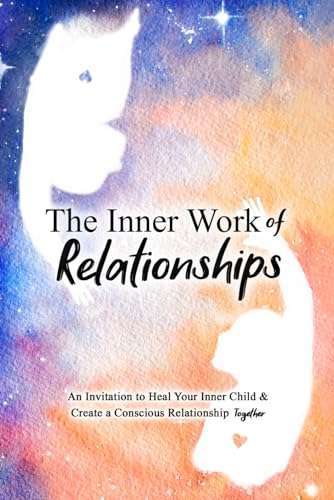
The Inner Work of Relationships: An Invitation to Heal Your Inner Child and Create a Conscious Relationship Together
Look, we all carry some sort of blueprint from childhood into our adult relationships. The thing is – most of us don’t even realize it’s happening. That argument about loading the dishwasher? It’s probably got way more to do with how you felt when your needs were ignored at age seven than the actual dishes.
Silvy Khoucasian’s “The Inner Work of Relationships: An Invitation to Heal Your Inner Child and Create a Conscious Relationship Together” is about bringing those childhood patterns into the light – but here’s the twist: you’re doing it as a couple, not alone on a therapist’s couch trying to figure everything out by yourself.
What This Book Actually Covers
This isn’t your typical “improve your communication” relationship book (though that stuff’s in here too). Khoucasian wants you and your partner to get a handle on the invisible forces shaping your relationship – the parts of you that formed when you were too young to understand what was happening.

The book walks through: – How attachment styles from childhood become relationship patterns in adulthood – Why you keep having the same fight in different packaging – The concept of the “inner child” (and why it’s not as woo as it sounds) – Practical exercises couples can do together to identify and heal old wounds – Creating what Khoucasian calls “conscious relationship” – where you’re aware of your patterns instead of controlled by them
Why This Matters for Therapy
If you’re in couples therapy in NYC or thinking about starting, this book provides a framework that really complements therapeutic work. Inner child work has been a constant thorn in the side of traditional relationship counseling – some therapists get it, some think it’s too abstract, some lean way too hard into it.
What makes this approach useful: it normalizes the fact that you’re bringing your younger self into every interaction with your partner. When your partner forgets to text you back and you spiral into “they don’t care about me” – that’s often your inner child talking, not your adult self making a rational assessment.
The Inner Child Framework
Identifying Your Triggers Khoucasian breaks down how to spot when you’re reacting from childhood wounds versus responding from your adult capacity. This section is really practical – not just theory about attachment, but actual “here’s how to notice when it’s happening” guidance.

The exercises ask you to look at patterns: When do you shut down? When does your partner’s tone send you into defense mode? What situations make you feel small or powerless? These aren’t comfortable questions, but they’re the ones that matter.
Partner as Co-Healer Here’s where the book gets interesting – it positions your partner not as the person who needs to fix themselves so you can be happy, but as someone who can help you heal (and vice versa). It’s a shift from “you hurt me” to “when you do X, it touches an old wound in me.”
This requires a level of vulnerability that can feel risky. You’re essentially saying “here’s where I’m still hurt from childhood” and trusting your partner to handle that with care. Not every couple is ready for that, and the book is honest about that.
Practical Exercises for Two Unlike books that just describe concepts, this one’s packed with exercises designed for couples to do together. Some feel a bit too structured (the “inner child dialogue” prompts can be awkward at first), but the point is to create conversations you wouldn’t naturally have.
You’re asking each other questions like: “What did you need as a child that you didn’t get?” and “How can I show up for that part of you now?” It’s intense stuff, but it cuts through a lot of surface-level relationship dynamics.
Creating New Patterns Together The final section focuses on building new relational patterns once you understand the old ones. Khoucasian calls this “conscious relationship” – being aware of your triggers, communicating them clearly, and actively choosing different responses instead of letting autopilot childhood patterns run the show.
This is where the book moves from insight to action. Understanding why you react a certain way is useful; learning how to interrupt that reaction and do something different is where change actually happens.
The Honest Take
This book requires a willingness to engage with the “inner child” concept, which can feel a bit too therapeutic-jargon for some readers. If you’re someone who prefers hard data and cognitive-behavioral approaches, this might not land for you.
Also – and this is important – the book assumes both partners are willing to do this work together. If one person is all-in and the other thinks inner child work is nonsense, you’ll hit a wall pretty fast. It’s not a book that works well when only one partner is reading it.
That said, for couples who are open to exploring how their pasts shape their present relationship, this is a really valuable resource. It provides language for dynamics that often feel confusing or overwhelming. And it’s written in a way that’s accessible without being overly simplistic.