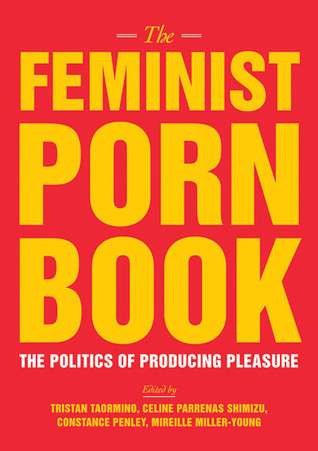
The Feminist Porn Book: The Politics of Producing Pleasure
Most conversations about porn and feminism treat them as opposites. You’re either pro-porn or anti-porn, and the assumption is that your position says something definitive about your politics. The Feminist Porn Book: The Politics of Producing Pleasure, edited by Tristan Taormino, Constance Penley, Celine Parreñas Shimizu, and Mireille Miller-Young, refuses that framing entirely. Instead, it asks a more interesting question: what happens when feminists are the ones making porn?
What This Collection Actually Offers
Published in 2013 by The Feminist Press, the book brings together essays from people who study, produce, direct, and perform in pornography. Contributors include Susie Bright, Nina Hartley, Betty Dodson, Buck Angel, and Candida Royalle, alongside academic scholars. The four editors are all established figures — Taormino is an award-winning sex educator and director, and the academic co-editors bring rigorous research from film studies, feminist theory, and African American studies at UC Santa Barbara.
The essays cover a wide range of ground:
- How feminist pornographers define their work and what distinguishes it from mainstream production
- The labor politics of sex work — who profits, who doesn’t, and what “ethical” production actually looks like
- Race, representation, and the specific challenges Black women and performers of color face in the industry
- Queer and trans pornography as sites of community building and identity exploration
- The history of the feminist porn wars of the 1980s and how the conversation has shifted
Some essays are deeply academic — footnoted, theory-heavy, written for people who already speak the language of gender studies. Others are personal and direct, coming from performers reflecting on their own experiences. The mix is part of what makes the book work, though it can also make for an uneven reading experience.
What It Gets Right and What It Misses
The book’s biggest contribution is taking the conversation beyond “is porn good or bad” and into the specifics of how it’s made, for whom, and by whom. That shift from morality to labor and representation is genuinely useful, especially for anyone who’s been stuck in a guilt loop about their own relationship to pornography.
The intersectional analysis is strong. Mireille Miller-Young’s work on Black women in porn is some of the most important scholarship in this area, and having it alongside first-person performer accounts creates a fuller picture than either perspective could alone.
The limitation is accessibility. If you don’t have a background in feminist or cultural theory, some essays will feel impenetrable. And the book is now over a decade old. The porn industry has changed significantly since 2013 — the rise of platforms like OnlyFans, changes in content moderation, shifting economics of production — and none of that is reflected here. It’s still a foundational text, but it’s not the last word.
There are also critics, notably academic Rebecca Whisnant, who argue that the book’s framework doesn’t adequately reckon with the structural harms of the porn industry, even in its “feminist” forms. That’s a critique worth sitting with rather than dismissing.
Reading This Alongside Therapy
This isn’t a self-help book and it doesn’t try to be. But it has real therapeutic value for specific people. If you’re working through shame about pornography, either as a consumer or as someone in the industry, this book provides a framework that doesn’t start from the assumption that something is wrong with you.
For anyone in sex therapy, the book can open up conversations about desire, representation, and the gap between what you’ve been told you should want and what actually turns you on. Those conversations are often the most productive ones in therapy, and having a shared text to reference makes them easier to start.
It’s also relevant for people exploring questions about queer identity and sexuality, particularly the essays on queer and trans porn as spaces for community and self-definition. And for anyone who’s curious about kink and the politics around it, several essays touch on BDSM production and feminist ethics in ways that complicate easy answers.
Who Should Pick This Up
This book is for readers who want to think critically about porn rather than just react to it. It’s especially useful if you’re in a place where you want to reconcile feminist values with sexual interests that feel contradictory, or if you’re interested in the labor and ethics of the sex industry beyond the usual moral panic.
It’s not a great starting point if you’re looking for something practical and easy to read. For a more accessible entry into sex-positive thinking, Come as You Are by Emily Nagoski is friendlier territory. And if you’re thinking about working through any of this with professional support, schedule a free consultation to find a therapist who won’t flinch at the conversation.