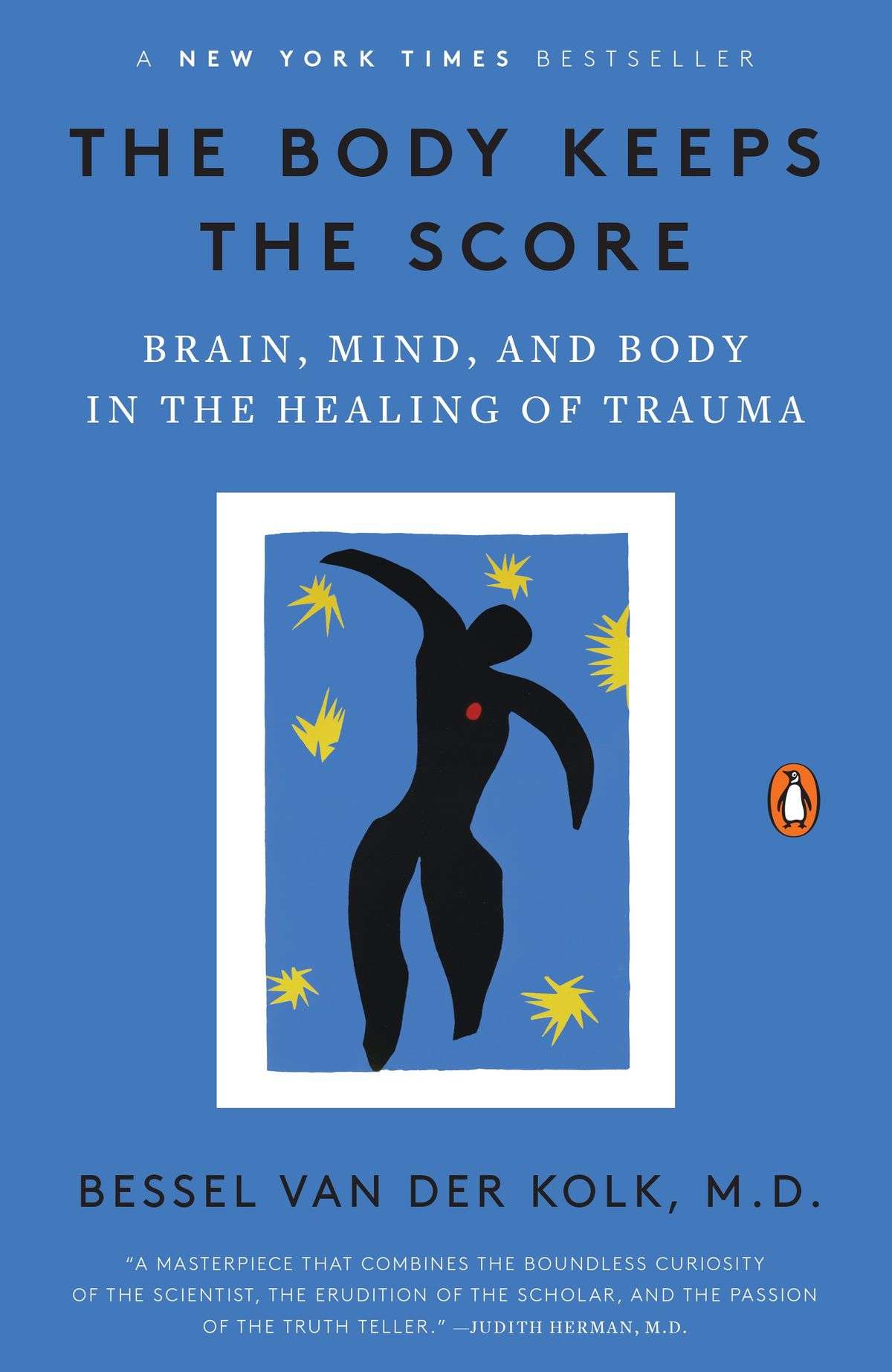
The Body Keeps the Score: Brain, Mind, and Body in the Healing of Trauma
Van der Kolk says trauma is only half psychological
Bessel van der Kolk is a Dutch-American psychiatrist who has studied post-traumatic stress since the 1970s, before PTSD was even an official diagnosis. He earned his M.D. from the University of Chicago, completed his psychiatry residency at Harvard, and spent decades at Boston University School of Medicine researching what happens to people after terrible things happen to them.
The Body Keeps the Score: Brain, Mind, and Body in the Healing of Trauma (Viking Penguin, 2014) is his attempt to put all of that into one place. It’s been on the New York Times bestseller list for years. It’s also one of the most argued-about books in the trauma field, and both the praise and the criticism are worth understanding.
The book’s central argument is that trauma doesn’t just change how you think. It changes your brain, your nervous system, your body. Your threat-detection system gets stuck in overdrive. Muscles hold tension from events that happened years ago. Flashbacks aren’t just memories replaying; they’re your entire physiology re-experiencing danger. Van der Kolk makes a case that healing from trauma and PTSD requires working with the body, not just talking through what happened.
Where the Book Gets It Wrong (or at Least Overstates It)
Here’s where the honest review part comes in: van der Kolk sometimes runs ahead of his evidence. A 2023 Washington Post review called the book out for promoting “uncertain science,” and multiple researchers have questioned whether some of his cited studies actually say what he claims they say. He has a habit of presenting emerging findings as settled fact, particularly around recovered memories, which is a contested area of psychology with a genuinely ugly history. Psychologist Richard McNally described van der Kolk’s reasoning on traumatic memory as “mistaken” and called recovered memory therapy one of the worst things to happen to the mental health field since lobotomies. That’s not a small criticism.
The book also leans heavily toward big-T trauma. Combat. Severe abuse. Natural disasters. If your trauma looks more like years of microaggressions, systemic discrimination, or growing up in a household where you learned your identity was something to hide, you’ll find less of yourself in these pages. That doesn’t make the neuroscience wrong, but it does limit who sees their experience reflected in the text.
The Author’s Own Controversy
Van der Kolk was fired from the Trauma Center he founded in Brookline, Massachusetts, in 2018. Staff alleged he created a hostile work environment through bullying and demeaning behavior toward employees. He denied the allegations and filed a lawsuit against the parent organization. Whatever happened behind closed doors, the irony of a trauma expert being accused of traumatizing his own staff is hard to ignore. It doesn’t invalidate the research, but it’s context worth having.
What the Book Does Well
With those caveats on the table, there’s a reason this book became a phenomenon. Van der Kolk does something genuinely valuable: he explains how trauma lives in the nervous system in a way that makes people feel less crazy. That tightness in your chest before your brain even registers what’s wrong. The way your body freezes in situations that aren’t actually dangerous. The disconnection from your own physical sensations that makes intimacy feel impossible. He gives names to experiences that a lot of people carry around without understanding why.
The sections on treatment are where the book earns its reputation. He covers EMDR, somatic approaches, yoga, neurofeedback, and even theater as tools for working with trauma. Some of these sound unconventional, but the body-based approaches have solid research behind them now. The core insight that healing means helping your nervous system feel safe again, not just reframing what happened cognitively, has genuinely shifted how many therapists approach anxiety and trauma work.
Who This Book Is Actually For
If you’ve done talk therapy and felt like it helped you understand what happened but didn’t change how your body reacts, this book will probably make a lot of sense. It’s particularly relevant for people dealing with complex or developmental trauma, where the effects show up as patterns in relationships, as chronic tension or dissociation, as difficulty feeling present during sex or close connection. For anyone whose trauma intersects with identity, sexuality, or how they experience their own body, the framework here gives language to something that’s hard to articulate.
It’s dense. It’s clinical in places. You might skim the neuroscience chapters and spend more time on the treatment sections. That’s fine. Not every reader needs to understand the amygdala-prefrontal cortex relationship to get something useful from this book.
If the body-based approaches interest you, look for a therapist who’s trained in somatic or EMDR methods and who understands how trauma intersects with identity, depression, and relationships. Reading about it is a start; doing the work with someone who gets it is where things actually shift.
About Bessel van der Kolk
Van der Kolk has been studying trauma since before it was fashionable. He began working with Vietnam veterans in the mid-1970s and was among the researchers who pushed for PTSD to be included in the DSM. He served as president of the International Society for Traumatic Stress Studies and co-directed the National Child Traumatic Stress Network.
His research at Boston University and the Trauma Center shaped how the field thinks about body-based interventions, and he’s been instrumental in getting EMDR recognized as an evidence-based practice. He’s a polarizing figure. Brilliant and controversial in roughly equal measure, but his influence on trauma treatment is hard to overstate.
Further Reading
If The Body Keeps the Score resonates with you or leaves you wanting a different angle on some of the same ideas, these are worth picking up:
My Grandmother’s Hands by Resmaa Menakem takes the idea that trauma lives in the body and extends it to racialized trauma, looking at how white supremacy has shaped the nervous systems of Black, white, and police bodies across generations. It fills a gap van der Kolk’s book largely ignores.
Healing Sex by Staci Haines offers a practical, body-based approach to recovering from sexual trauma, with exercises designed to rebuild safety and pleasure in your own body. More hands-on than van der Kolk’s overview.
Unfuck Your Anxiety by Faith Harper covers similar neuroscience territory in a fraction of the pages and with way less clinical language. If van der Kolk felt too dense, start here instead.
Wherever You Go, There You Are by Jon Kabat-Zinn is a good companion if the mindfulness and body-awareness aspects of trauma recovery interest you. Less trauma-specific, more about learning to be present in your body without judgment.