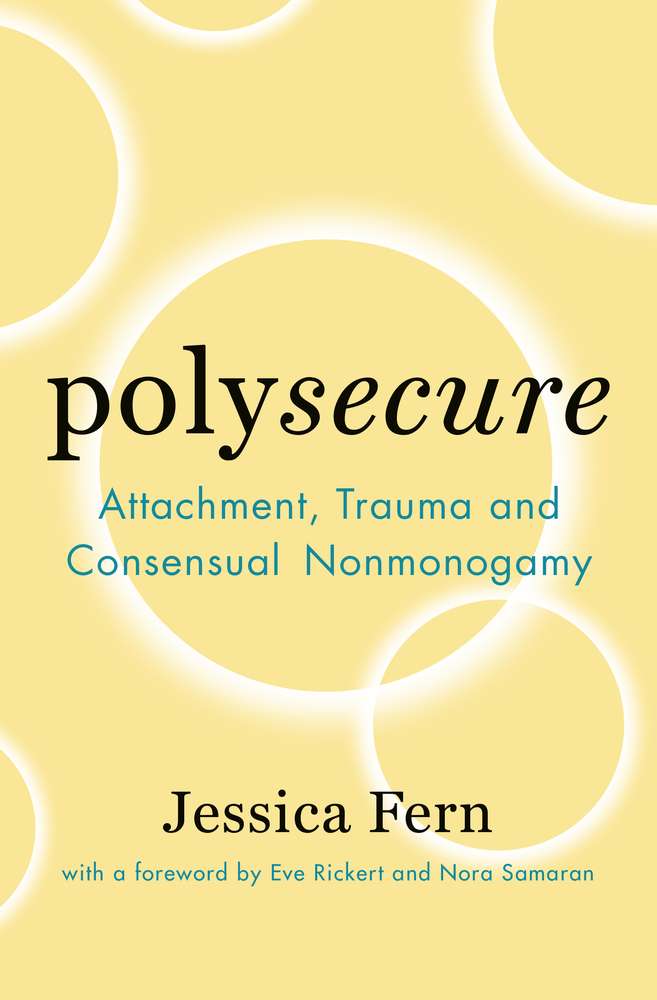
Polysecure: Attachment, Trauma and Consensual Nonmonogamy
If you’re doing non-traditional relationships, you’ve probably noticed that most attachment theory resources assume you’re monogamous. Jessica Fern’s book fixes that. She takes attachment theory – the stuff about how your early relationships shape the way you connect with people as an adult – and applies it specifically to non-monogamy. It’s the book a lot of poly folks have been waiting for.
Attachment Theory, But Actually Relevant to Your Life
Fern breaks down attachment styles in a way that makes sense without being condescending. She explains how your childhood experiences shape your adult relationships, but instead of pathologizing different attachment styles, she frames them as adaptive responses. You developed these patterns because they kept you safe at some point. Now they might be getting in the way.
What makes this different from other attachment books: Fern gets into how you might feel totally secure with one partner and anxious with another. That inconsistency confuses a lot of people in poly relationships. She explains why it happens and what to do about it.
About the Author
Jessica Fern is a psychotherapist who works with non-monogamous clients and practices polyamory herself. That dual perspective – clinician and community member – comes through in the writing. She knows the theory and she knows what it actually feels like. Worth noting: some people in poly communities have critiqued her work for not going deep enough on intersectionality and systemic issues.
The HEARTS Framework
The most practical part of the book is her HEARTS framework for building security across multiple relationships:
Here to stay: Communicating commitment in ways that fit each relationship. Expressed delight: Actually showing your partners you’re happy to see them. Attunement: Paying attention to what’s going on emotionally across your relationships. Rituals and routines: Creating patterns that give each connection its own shape. Turning toward after conflict: How to repair things when they go sideways. Secure attachment with self: Building your own internal stability so you’re not depending on any single relationship to hold you together.
It’s structured enough to be useful without being so rigid that it feels like a checklist.
Where the Book Really Shines
The best parts are the concrete examples. Like when a nesting partner starts dating someone new and you intellectually support it but your nervous system is losing its mind. Fern doesn’t just call that jealousy and tell you to journal about it. She names it as an attachment response and gives you specific ways to work with it. That distinction matters.
She’s also good on the differences between various ENM structures. Someone might feel fine with their partner having casual sex but get activated by emotional intimacy with someone else. Understanding that through an attachment lens helps you figure out what you actually need, not just what you think you should be okay with.
Where It Has Limits
The book doesn’t spend enough time on how systemic factors affect attachment and relationships. If you’re from a marginalized community, the social pressures on your relationships are different, and those pressures affect your attachment security in ways the book doesn’t fully address. It also tends to center the experience of people transitioning from monogamy to polyamory, which can feel like it’s overlooking people who’ve been doing this all along.
Some therapists who work with poly clients note that the framework works best for people who already have decent support systems and emotional resources. If you’re dealing with significant trauma or a major relationship upheaval, you’ll probably need more than what the book can offer on its own.
Using This in Your Own Relationships
Start by noticing your own patterns. Where do you feel secure? Where do you get activated? Share the HEARTS framework with your partners and talk about which pieces feel most important. A lot of people find that just having words for what they’re experiencing makes a real difference.
For going deeper, working with a therapist who understands poly relationships can help you apply these ideas to your specific situation and attachment history.
Related Reading
If you want to keep going, check out “The Smart Girl’s Guide to Polyamory” by Dedeker Winston, “Building Open Relationships” by Dr. Liz Powell, or “The Ethical Slut” by Dossie Easton and Janet Hardy.
Find it on OpenLibrary here