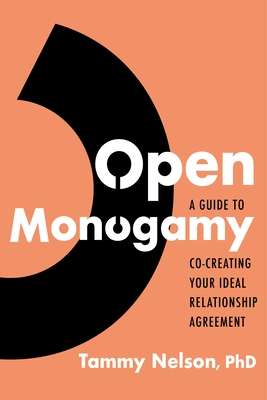
Open Monogamy: A Guide to Co-Creating Your Ideal Relationship Agreement
When couples start questioning traditional relationship boundaries, they often can’t find professional guidance that actually fits where they are. Tammy Nelson’s “Open Monogamy: A Guide to Co-Creating Your Ideal Relationship Agreement” is a solid roadmap for couples exploring consensual non-monogamy, and it’s one we regularly recommend to clients working with a polyamory therapist.
Beyond Traditional Boundaries: The Monogamy Continuum
Nelson introduces what she calls the “monogamy continuum,” a framework that recognizes relationships exist on a spectrum, not in neat categories. This pushes back against the either/or thinking that’s dominated relationship therapy for way too long, giving couples room to explore arrangements that might include emotional connections with others, physical intimacy beyond their primary partnership, or entirely different relationship structures altogether.
The author gets that many couples come to non-monogamy not because something is broken, but out of genuine curiosity about expanding their capacity for love and connection. For polyamory therapists, this is a welcome change from the default mode of pathologizing clients who want to explore alternative relationship styles. Nelson argues that wanting multiple connections can come from abundance, not deficiency. That’s a crucial distinction for therapists working in this space.
Her framework also includes practical assessment tools, helping couples figure out where they fall on the continuum and where they actually want to be. This is especially useful for therapists who need concrete ways to guide clients through some pretty complicated emotional territory.
Agreements That Actually Work
The real meat of Nelson’s methodology is her approach to relationship agreements. Instead of cookie-cutter solutions, she walks couples through a co-creation process that honors each partner’s values, fears, and desires. This lines up with how polyamory therapy actually works in practice: emphasizing consent, communication, and ongoing negotiation.
Nelson’s “3 Ps framework” looks at potential possibilities, problems, and positives. It gives couples a structured way to explore scenarios before they come up in real life. A couple might talk through the possibility of one partner developing romantic feelings for a friend, looking at both what could go wrong and what growth might come from it. This kind of proactive approach helps partners build emotional resilience and communication skills before real-life situations test them.The book includes plenty of examples from diverse couples who have made different forms of consensual non-monogamy work. These case studies show how personality, life circumstances, and relationship history lead to very different agreements. A couple in their 50s might prioritize emotional transparency while keeping things sexually exclusive, while younger partners might explore physical connections with clear boundaries around romantic involvement.
Real World Applications for Modern Relationships
Nelson’s practical guidance goes well beyond theory into stuff couples can actually use right away. Her discussion of consent digs much deeper than simple yes/no conversations, getting into the ongoing nature of enthusiastic agreement and why regular check-ins matter. That kind of understanding around consent is essential for anyone in polyamory therapy or working with non-monogamous therapists.
The author tackles the common challenges that come up in open relationships, from jealousy management to time allocation between multiple partners. Her suggestions for handling these difficulties draw from both therapeutic best practices and real-world experience with couples who’ve been through similar situations. She provides specific language for discussing uncomfortable feelings without blame or accusation, which honestly are skills that help regardless of relationship structure.
Nelson also covers the practical logistics that most relationship guides skip entirely. How do couples handle social situations when their relationship style isn’t widely understood? What about family gatherings, work events, or interactions with children’s schools? These everyday situations often cause more stress than the emotional side of non-monogamy, which makes Nelson’s practical take on them really valuable.
Contemporary Critiques and Limitations
While Nelson’s work is valuable, there are some real limitations worth noting. Some readers have pointed out that the book occasionally frames monogamy as less evolved or psychologically healthy than non-monogamous arrangements. That framing can feel dismissive to people who genuinely prefer exclusive relationships, and it creates the same kind of judgment that non-monogamous people have historically dealt with.
The emphasis on therapeutic language and communication frameworks, while generally helpful, may unintentionally give an advantage to partners who are more comfortable with psychological terminology. This can create power imbalances in relationships where one person is more fluent in therapy-speak than the other. Polyamory-friendly therapists should watch for this dynamic when recommending the book to clients with different educational backgrounds or communication styles.Also, some of the cultural assumptions in Nelson’s work don’t translate well across different communities or socioeconomic contexts. The examples tend to feature couples with significant time, emotional energy, and often financial resources to invest in complex relationship negotiations. That doesn’t invalidate the core ideas, but it does mean some adaptation is needed when working with a wider range of people.
About the Author
Tammy Nelson is a licensed psychotherapist and certified sex therapist. Her clinical background gives the book real therapeutic credibility, and her specialization in couples therapy brings practical relationship insight. She has worked with couples exploring various relationship configurations for decades, so her writing carries an authenticity that purely academic approaches often miss.
Her previous work focused on infidelity recovery and relationship repair, experiences that inform how she thinks about trust, betrayal, and rebuilding. This background is particularly relevant for couples who come to non-monogamy after experiencing traditional relationship challenges, since she understands both the wounds that need healing and the growth that can follow.
Using This Book in Therapy
For people considering polyamory therapy, this book works well as a preparation tool. Reading it before starting therapy can help you get clearer on your values and figure out where professional guidance would be most helpful. The self-assessment questions throughout can spark real discussion topics for therapy sessions.
Couples already working with a polyamory therapist will find the exercises complement professional guidance nicely. The structured approach to creating relationship agreements can serve as homework between sessions, and the case studies give concrete examples of how other couples have worked through similar challenges.
If you’re looking for polyamorous relationship therapy, keep in mind that while this book provides useful frameworks, it’s not a substitute for professional support when things get emotionally complex. The combination of Nelson’s practical guidance with skilled therapeutic support tends to produce the best outcomes for couples exploring consensual non-monogamy.
More to Explore
If you want to go deeper into consensual non-monogamy, “The Ethical Slut” by Janet Hardy and Dossie Easton offers a more historical and philosophical foundation. “Polysecure” by Jessica Fern has great insight into attachment theory as it applies to multiple relationships, and “More Than Two” by Franklin Veaux and Janet Hardy has additional practical guidance for managing complex relationship networks.If you want more therapeutic non-monogamy resources, “The Polyamory Toolkit” by Dan Williams and Dawn Williams has exercises and communication tools that pair well with Nelson’s framework.
Find it on Open Library here.