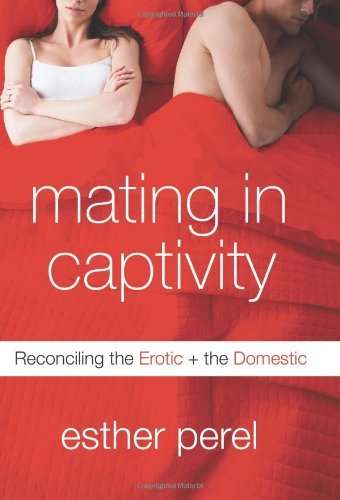
Mating in Captivity: Reconciling the Erotic and the Domestic
The Desire Paradox: Why Safety Kills Passion
Here’s the thing nobody tells you about long-term relationships: the very things that make you feel secure are often the same things that kill your sex life. You build trust, create routines, become each other’s safe harbor – and somewhere along the way, desire just… disappears. Not because you’ve fallen out of love, but because you’ve gotten really good at being comfortable.
Esther Perel’s “Mating in Captivity” tackles this head-on. The book digs into one of the messiest contradictions in relationships: we need both security and mystery, both closeness and separateness, both comfort and excitement. And for a lot of us, those feel like competing goals.
What Perel Gets Right About Desire
Perel’s central argument is that erotic desire needs space to breathe. She challenges the idea that intimacy always means closeness – suggesting instead that too much intimacy can actually smother desire. Think about it: when you know every detail of your partner’s day, share every thought, and exist in constant togetherness, where’s the room for curiosity? Where’s the sense of otherness that makes someone feel exciting?

The book explores how domestic life – bills, routines, household management, becoming “Mom” and “Dad” instead of lovers – creates what Perel calls “erotic entropy.” The slow fade of sexual energy in committed relationships isn’t a sign that something’s broken. It’s a predictable outcome of putting security and predictability above everything else.
For couples working on sex therapy or anywhere else, this framework is useful. It normalizes desire discrepancy without pathologizing it. The low-desire partner isn’t “broken” – they’re often just suffocating under too much closeness. The high-desire partner isn’t “oversexed” – they’re craving the spark that brought them together in the first place.
Key Topics: What the Book Actually Covers
Perel draws from her practice as a couples therapist to break down several core themes:
The Tension Between Security and Adventure: Perel argues that passion requires uncertainty, risk, a bit of danger. But committed relationships are built on the opposite – predictability, reliability, safety. The book explores how couples can hold both without sacrificing one for the other.
The Role of Separateness: One of Perel’s more provocative ideas is that desire needs distance. She talks about how keeping separate interests, social circles, and personal space can actually reignite attraction. Too much “we” leaves no room for “I” – and without “I,” there’s no one interesting left to desire.
How Parenthood Changes the Erotic: For couples with kids, Perel gets into how parenting roles can kill sexual energy. When you’re focused on caregiving, responsibility, and safety (all deeply un-erotic states), it’s tough to switch back into a sexual mindset. She explores how couples can separate these roles without feeling guilty.
Cultural and Gender Scripts: The book examines how cultural expectations around gender, monogamy, and sexuality shape what we think desire “should” look like. Perel challenges the idea that good communication and emotional intimacy automatically lead to great sex – sometimes they actually work against it.
Rekindling Desire: The final section offers practical frameworks for bringing back erotic energy: creating mystery, embracing fantasy, reclaiming individuality, and learning to see your partner as someone separate from you (not just an extension of yourself).
The Honest Assessment: Where This Book Falls Short
Let’s be real – “Mating in Captivity” has its limitations. The book is deeply heteronormative. Most of Perel’s examples involve straight couples in traditional gender roles (husband/wife, mother/father dynamics). If you’re in an LGBTQ+ relationship, polyamorous setup, or kink-oriented dynamic, you’ll need to translate her examples into your own context.

For clients working with LGBTQ+ affirming therapists or kink-aware practitioners, the book’s frameworks are still useful – but they need adapting. The core tension between security and desire applies across relationship structures, but the solutions look different when you’re not operating within heterosexual monogamy.
The book also leans heavily on psychoanalytic concepts, which can feel a bit abstract if you’re looking for step-by-step exercises. Perel is more interested in shifting your mindset than giving you homework assignments. That’s powerful for some people, frustrating for others.
And there’s this: Perel’s focus on maintaining separateness can feel unrealistic for couples dealing with chronic illness, caregiving responsibilities, financial stress, or small living spaces. Creating “distance” is a lot easier when you have resources.
Why This Book Matters for Sex Therapy and Couples Work
Despite its limitations, “Mating in Captivity” remains one of the most-recommended books in sex therapy for a reason. It reframes desire discrepancy as a predictable outcome of domesticity, not a personal failure. That alone can reduce shame and open up conversations.
For couples in therapy, the book offers language for something that’s often hard to say out loud: “I love you, but I’m not turned on by you anymore.” Perel gives permission to want both security and passion, to need both closeness and separateness, without feeling like you’re asking for too much.
The book also pushes back against the idea that “good relationships” mean constant emotional availability and total transparency. Sometimes, a little mystery is healthy. Sometimes, not sharing every feeling creates room for desire to grow.