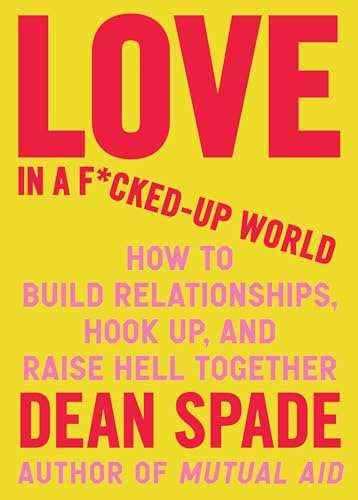
Love in a F*cked-Up World: How to Build Relationships, Hook Up, and Raise Hell Together
Traditional relationship advice feels disconnected from how we actually live and love today. Dean Spade’s “Love in a F*cked-Up World” cuts through the usual promises of quick fixes and perfect partnerships. Spade, a law professor and longtime activist, takes a hard look at how we approach relationships, friendship and intimacy and comes away with something pretty different from the standard playbook. If you’re looking for alternatives to conventional relationship wisdom, this book offers challenging ideas and practical tools for building more real connections.
What Makes This Relationship Book Different
Most relationship guides focus on romantic partnerships, but Spade centers what he calls “relational promiscuity” – building diverse, real connections across all areas of life. This is what therapists already know: healthy people need multiple sources of support, validation and connection. The book challenges the “romance myth” – the cultural belief that one romantic partner should meet all our emotional needs – which creates a lot of relationship distress.
Spade writes from an explicitly queer, anti-capitalist perspective, so this is especially relevant for LGBTQ+ folks or those whose experiences don’t show up in traditional relationship counseling resources. The book looks at how systemic oppression, economic instability and social isolation affect our capacity for healthy relationships, rather than treating relationship problems as individual issues.
Practical Tools for Emotional Growth and Communication
The book’s exercises and frameworks are the most useful part. Spade introduces “sore spots” – emotional triggers that send us into reactive patterns – and gives concrete strategies for identifying and working with them. This overlaps with techniques from emotionally focused therapy and dialectical behavior therapy, so it’s relevant if you’re working on emotional regulation.
The “Gentleness and Rigor Assessment” lets you evaluate your relationship patterns without shame or perfectionism. This tool encourages honest self-reflection while being kind, something a lot of people struggle with. The book also has exercises for giving and receiving feedback – a skill we all need to be better at but rarely get taught.
The emphasis on differentiation – being yourself in relationships – makes great homework for couples therapy. The exercises around identifying personal values and boundaries are especially good if you’re working on codependency or enmeshment patterns.
Where Therapy and Activism Overlap
Spade’s rejection of hierarchical relationship structures tracks with where sex therapy has been heading. The focus on consent, ongoing negotiation and honest communication about needs and boundaries reflects current best practice in relationship counseling. And his take on how trauma and family-of-origin patterns show up in adult relationships shows a real understanding of attachment theory – it’s not just theory for theory’s sake.
The book treats jealousy as information rather than pathology, which lines up with how most good therapists approach difficult emotions: they’re messengers, not problems to fix. Spade encourages readers to get curious about what jealousy might be telling them about unmet needs or insecurities rather than just trying to squash those feelings.
The book’s strong advocacy for non-monogamy may feel prescriptive to some readers. While Spade makes good points about the limitations of expecting one person to meet all our needs, the text sometimes implies that choosing monogamy reflects internalized oppression rather than genuine preference. If you’re monogamous, you can still extract the useful communication tools without feeling pressured to restructure your whole relationship.
Where It Gets Tricky in Practice
The frameworks are solid but some readers will struggle to actually use them. The emphasis on constant communication and processing can be overwhelming if you’re already dealing with anxiety or relationship fatigue. The book could use more guidance on how to pace these conversations and when to take a break from intense emotional work.
It also assumes a level of emotional readiness and willingness to have hard conversations that isn’t realistic for all relationships. If your partner isn’t equally on board with doing this kind of work, some of the collaborative exercises will be frustrating.
If you do pick this up, read it slowly – maybe one chapter per week – and talk through the key pieces with your therapist. The exercises work better when you spread them out rather than powering through.
Cultural Context and Limitations
Spade’s perspective is from a specific cultural context that won’t resonate with everyone. The emphasis on radical politics and anti-establishment thinking may feel alienating if you come from a more traditional background. The book addresses some aspects of systemic oppression but could go deeper on how race, class and cultural differences shape relationship dynamics.
The book’s treatment of mental health is compassionate but sometimes oversimplifies conditions like depression, anxiety or trauma responses. If you’re dealing with significant mental health challenges, treat this as a supplement to professional support, not a replacement.
How to Get the Most Out of It
Approach it as a workbook rather than a quick read. Set aside time for the reflection exercises and consider discussing what comes up with trusted friends or your therapist. The book works well for book clubs or reading groups since a lot of the concepts benefit from hearing different perspectives. Chapters 4 and 6 are the most practical for improving how you handle relationships and emotions day to day.
More to Read
If you want to dive deeper into these topics, “Polysecure” by Jessica Fern goes into more detail on attachment theory in non-traditional relationships, “The Ethical Slut” by Janet Hardy and Dossie Easton has more practical advice for non-monogamy and “Hold Me Tight” by Sue Johnson has evidence-based tools for monogamous relationships.
Love in a F*cked-Up World is a fresh take on relationship problems that a lot of people will find relatable and useful. Not everyone will agree with all of Spade’s conclusions, but the emphasis on communication, emotional awareness and community building is worth the read regardless of your relationship structure.