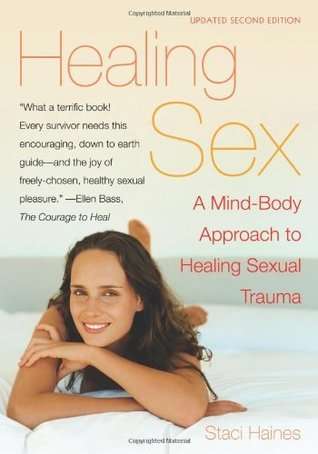
Healing Sex: A Mind-Body Approach to Healing Sexual Trauma
If You’ve Lost Touch With Your Own Sexuality After Trauma
Sexual trauma doesn’t just leave emotional scars. It gets into your body. It changes how you respond to touch, how you feel about desire, whether you can stay present during sex or find yourself checking out mid-experience. A lot of survivors describe feeling like their body belongs to someone else, or like there’s a wall between them and any kind of physical pleasure.
Staci Haines wrote Healing Sex: A Mind-Body Approach to Healing Sexual Trauma out of decades of work at this exact intersection. She’s a Certified Master Somatic Coach, a senior teacher at Strozzi Institute, and the founder of generative somatics, an organization that brings body-based healing practices to survivors and social justice communities. She’s also the author of The Politics of Trauma. The book was originally published in 1999 by Cleis Press, updated in 2007, and has been translated into German, Japanese, and Spanish. What sets it apart from most trauma recovery books is the premise: healing from sexual trauma isn’t just about processing what happened to you. It’s about rebuilding your relationship with your own body and your own desire.
What the Book Actually Covers
Haines structures the book around a progression that makes intuitive sense if you’ve done any somatic therapy or body-based work. She starts with understanding how trauma lives in the body, specifically how it shows up as dissociation, numbness, or hyperarousal during sexual experiences. Then she moves into practical territory:

- How dissociation works during sex and what to do when it happens
- Reconnecting with physical sensation through specific exercises
- Anatomy and arousal explained without clinical detachment
- Masturbation as a healing practice (not just a suggestion, but with structured guidance)
- Rebuilding consent and communication with partners
- Working through triggers that surface during intimacy
Each chapter includes exercises designed to be done at your own pace. These aren’t vague prompts like “journal about your feelings.” They’re concrete, body-based practices that build on each other. Some are solo, some involve a partner.
Why the Somatic Angle Matters
Most trauma therapy approaches sexual recovery from the neck up. Talk about what happened, process the emotions, develop coping strategies. That’s real and necessary work. But Haines makes a strong case that it’s not enough when the problem shows up specifically in your body during sex.
If you freeze when someone touches you a certain way, no amount of cognitive reframing fixes that in the moment. If you dissociate during intimacy, understanding why you dissociate doesn’t automatically help you stay present. The book addresses this gap directly. Haines teaches readers how to notice what’s happening in their body in real time and develop new physical responses, not just new thoughts about old experiences.
This is where Healing Sex pairs well with a book like The Body Keeps the Score, which lays out the neuroscience of how trauma gets stored in the body. Haines takes that understanding and applies it specifically to sexuality and intimacy.
The Sex-Positive Piece
Here’s what really distinguishes this book. Most sexual trauma recovery resources treat sex as something survivors need to tolerate again. The goal is basically “get to a place where sex doesn’t hurt you.” Haines goes further. She explicitly works toward pleasure, desire, and sexual agency as outcomes worth pursuing.

That matters, because a lot of survivors internalize the idea that their sexuality is permanently damaged. Haines rejects that framing. The book treats sexual pleasure as something survivors have a right to reclaim, not just something they should be able to endure. For people working through the aftermath of sexual trauma in sex therapy, that distinction between tolerating sex and actually wanting it can be the difference between going through the motions and genuine recovery.
What the Book Doesn’t Do Well
A few things to know before picking it up.
The most consistent criticism is that the language is dated. The book was written in the late ’90s and updated in 2007, and it shows. Haines uses binary gender language throughout, addressing the book primarily to women. Survivors who are men, nonbinary, or trans may find the framing exclusionary, even though the somatic principles themselves apply regardless of gender. If you’re looking for something more inclusive on that front, it’s worth knowing going in.
The book also includes multiple detailed accounts of sexual abuse from survivors. These testimonies are part of what makes the book feel real and validating for many readers, but they can be activating. This isn’t a book to power through in a weekend. Readers consistently say it works best taken slowly, a chapter at a time, ideally with therapeutic support.
Some of the exercises are more useful at certain stages of healing than others. If you’re still in the acute phase of processing trauma, the body-based sexual exercises may feel like too much too soon. The book works best for people who’ve already done some foundational trauma work and are ready to specifically address how trauma shows up in their sexual life.
Who This Book Is For
Healing Sex is most useful for survivors who’ve done some initial trauma processing and are now hitting the wall that a lot of people hit: “I’ve talked about this in therapy, I understand what happened, but my body still reacts the same way during sex.” If that sounds familiar, this book speaks directly to that gap.
It’s also genuinely useful for partners of survivors. There’s enough in here about communication, consent, and what’s actually happening during a trigger response that a partner reading it would come away with a much better understanding of what’s going on and how to be helpful without being intrusive. If you’re working with a therapist on sexual trauma recovery or body-based approaches to healing, this book gives you a framework and concrete exercises to practice between sessions. It doesn’t replace therapy, but it’s one of the better companions to it.
You can find Healing Sex: A Mind-Body Approach to Healing Sexual Trauma on Goodreads →. For another angle on the relationship between body and sexuality after trauma, Come as You Are by Emily Nagoski covers related ground from a different direction.