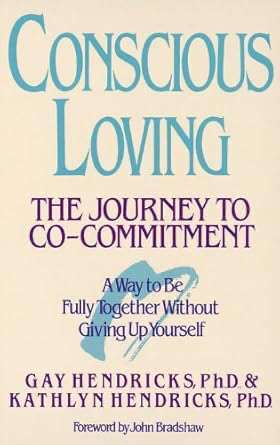
Conscious Loving: The Journey to Co-Committment
Look, if you’ve spent any time in couples therapy NYC circles, you’ve probably heard someone mention Conscious Loving. Published back in 1990, Gay Hendricks and Kathlyn Hendricks wrote what became a sort of relationship therapy bible – one that therapists still reference decades later, even if some of its language hasn’t quite kept up with how we talk about relationships now.
The book’s core idea is pretty radical when you think about it: most relationship problems aren’t really about your partner being difficult or incompatible. They’re about you bringing your old baggage into the room and dumping it all over the relationship. The Hendricks call this becoming “co-committed” – where both people commit to their own growth first, rather than trying to change each other or stay comfortable.
What the Book Actually Covers
Conscious Loving introduces what the authors call the “co-commitment model.” Instead of the traditional relationship approach where you’re trying to get your needs met by your partner (which, let’s face it, often turns into a constant thorn in the side for both people), co-commitment asks you to take responsibility for your own emotional patterns first.

The Hendricks are body-centered therapists, so there’s a heavy focus on somatic approaches – noticing where you hold tension, how your breathing changes during conflict, what your body is telling you before your mind catches up. If you’ve done any work with couples counseling that incorporates body awareness, this is going to feel familiar.
The book walks through what they call the “upper limits problem” – that thing where relationships are going great and then suddenly you sabotage them because deep down, you don’t believe you deserve the happiness. It’s about those unconscious contracts we make (“I’ll be small if you stay,” or “I’ll control everything if you never leave”) that absolutely wreck intimacy without us realizing we’ve even agreed to them.
There’s a whole framework for identifying these patterns, plus practical exercises for shifting them. The Hendricks give you body-based techniques, communication practices, and ways to spot when you’re defending against intimacy instead of opening up to it.
Why This Matters for Relationship Counseling
Here’s the thing about Conscious Loving – it laid groundwork that relationship counseling still uses today. The idea that you’ve got to work on your own patterns before you can really show up for partnership? That’s everywhere now in couples therapy approaches.
This pattern plays out constantly in couples counseling work. Clients come in wanting their partner to change, and the real work ends up being helping each person get a handle on their own defensive patterns, their own trauma responses, their own ways of shutting down or controlling when things get scary.
The body-centered piece is huge too. So many relationship issues live in the nervous system – the way you tense up when certain topics come up, the way your breathing gets shallow during conflict, the way your body knows something’s wrong before your conscious mind admits it. The Hendricks were talking about this stuff in 1990, way before “somatic experiencing” became the buzzword it is today.
For couples doing the work in therapy – particularly folks in non-traditional relationship structures or working through significant trauma histories – the co-commitment model offers a framework that keeps you focused on your own growth rather than trying to control your partner’s process.
Key Topics You’ll Find
The book covers a lot of ground:

The Four Relationship Stages: How relationships typically move from romance through power struggle to co-commitment (or fall apart trying)
Unconscious Agreements: Those hidden contracts that run relationships from behind the scenes – “I’ll never ask for what I need if you never leave me”
Body-Centered Communication: How to notice and shift your physical responses during difficult conversations
Upper Limits Problem: Why we sabotage good things when they exceed our internal “set point” for happiness
Wholeness vs. Neediness: The difference between coming to partnership from a place of completeness versus looking for someone to fill your gaps
Breathing and Presence Practices: Specific techniques for staying grounded during conflict
The Honest Assessment (Because We Should Probably Mention This)
Conscious Loving has some age on it, and it shows. The examples throughout the book are almost exclusively heterosexual couples working through pretty traditional relationship dynamics. If you’re coming to this from a queer relationship, polyamorous structure, or any configuration that doesn’t fit the 1990 married-couple template, you’re going to have to do some translating.
The language around gender is dated too – there’s a lot of “men do this, women do that” that feels pretty binary and essentialist by today’s standards. Some of the framing around masculine/feminine energy might land as useful metaphor for some folks, but it’s going to feel limiting or off-base for others.
That said, the core concepts about taking responsibility for your own patterns, noticing body responses, and breaking unconscious contracts? Those translate across relationship structures and identities pretty well. You just might need to mentally edit out some of the heteronormative packaging to get to the useful stuff underneath.