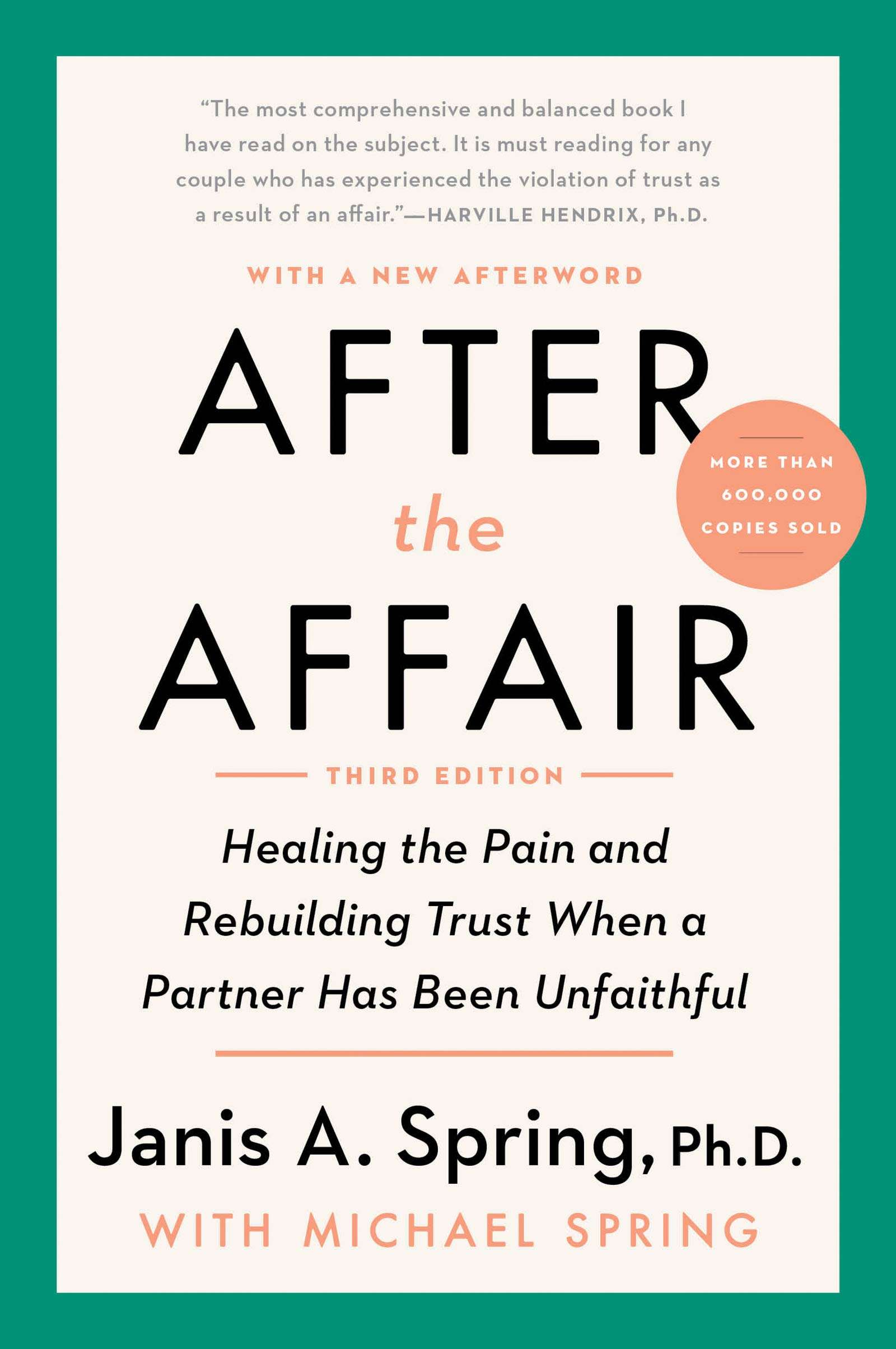
After the Affair: Healing the Pain and Rebuilding Trust When a Partner Has Been Unfaithful
The Ground Just Dropped Out
You found the texts. Or they told you. Or you’ve been carrying a secret that’s eating you alive. Either way, everything you thought you knew about your relationship just got rewritten, and you’re stuck somewhere between rage, grief, and a kind of disorientation that makes it hard to get through a Tuesday.
Infidelity does that. It doesn’t just hurt. It scrambles your sense of reality. You start questioning everything: the good years, the things they said, your own judgment. And if you’re the one who had the affair, you’re probably drowning in your own mess of guilt, defensiveness, and confusion about what you actually want.
Janis Abrahms Spring wrote After the Affair after more than three decades as a clinical psychologist, much of that time spent working with couples in exactly this crisis. She supervised clinicians at Yale and built a private practice in Connecticut centered on trust, intimacy, and forgiveness. The book has sold over 600,000 copies since 1996, and the third edition (2020) updates it for the realities of emotional affairs, online infidelity, and the ways technology has made secrecy both easier and harder to maintain.
What the Book Actually Does
Spring breaks recovery into three stages, and the structure is one of the book’s biggest strengths. Instead of vague reassurance that “things will get better,” she maps out what each phase looks like and what both partners need to do at each point.
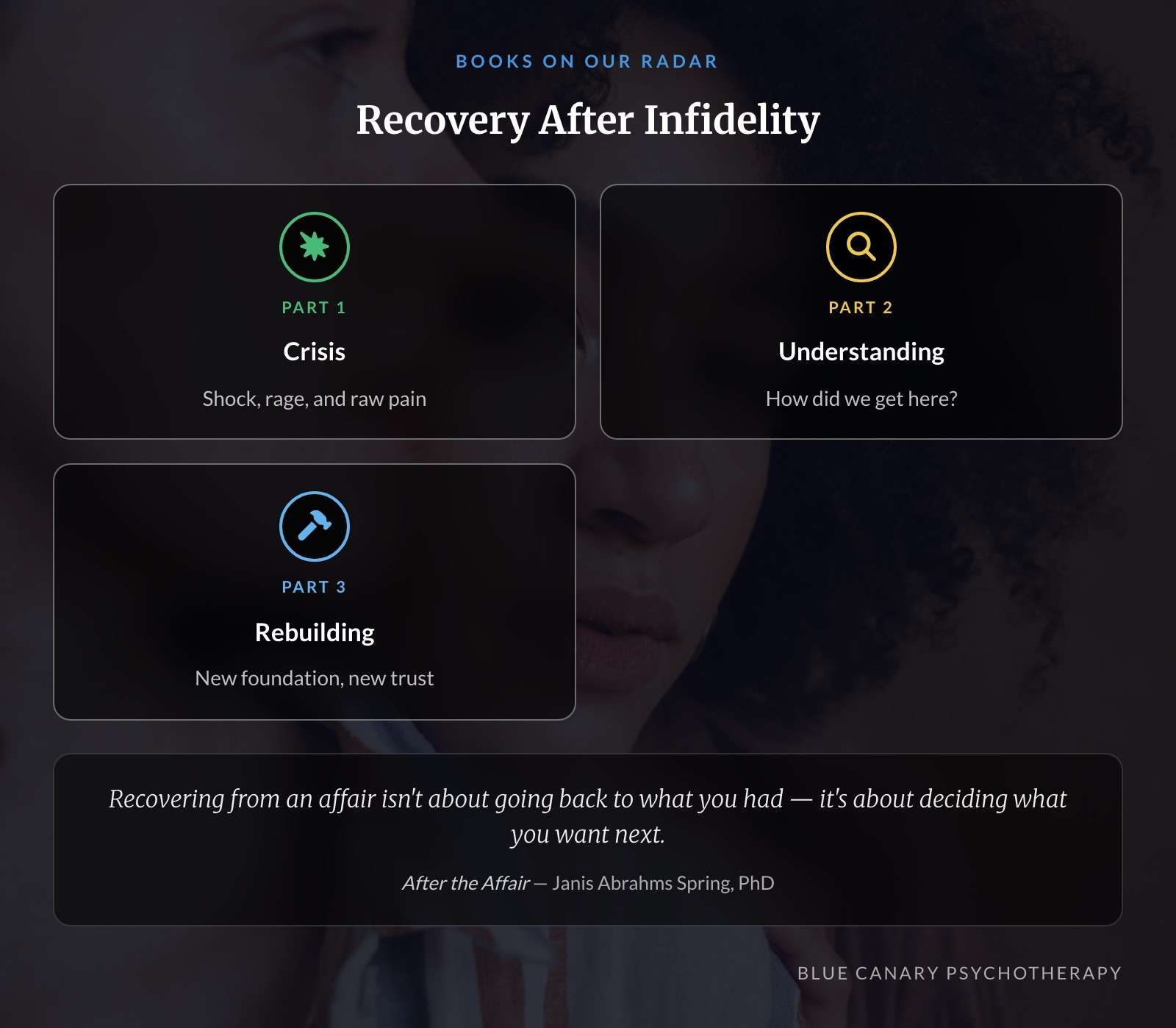
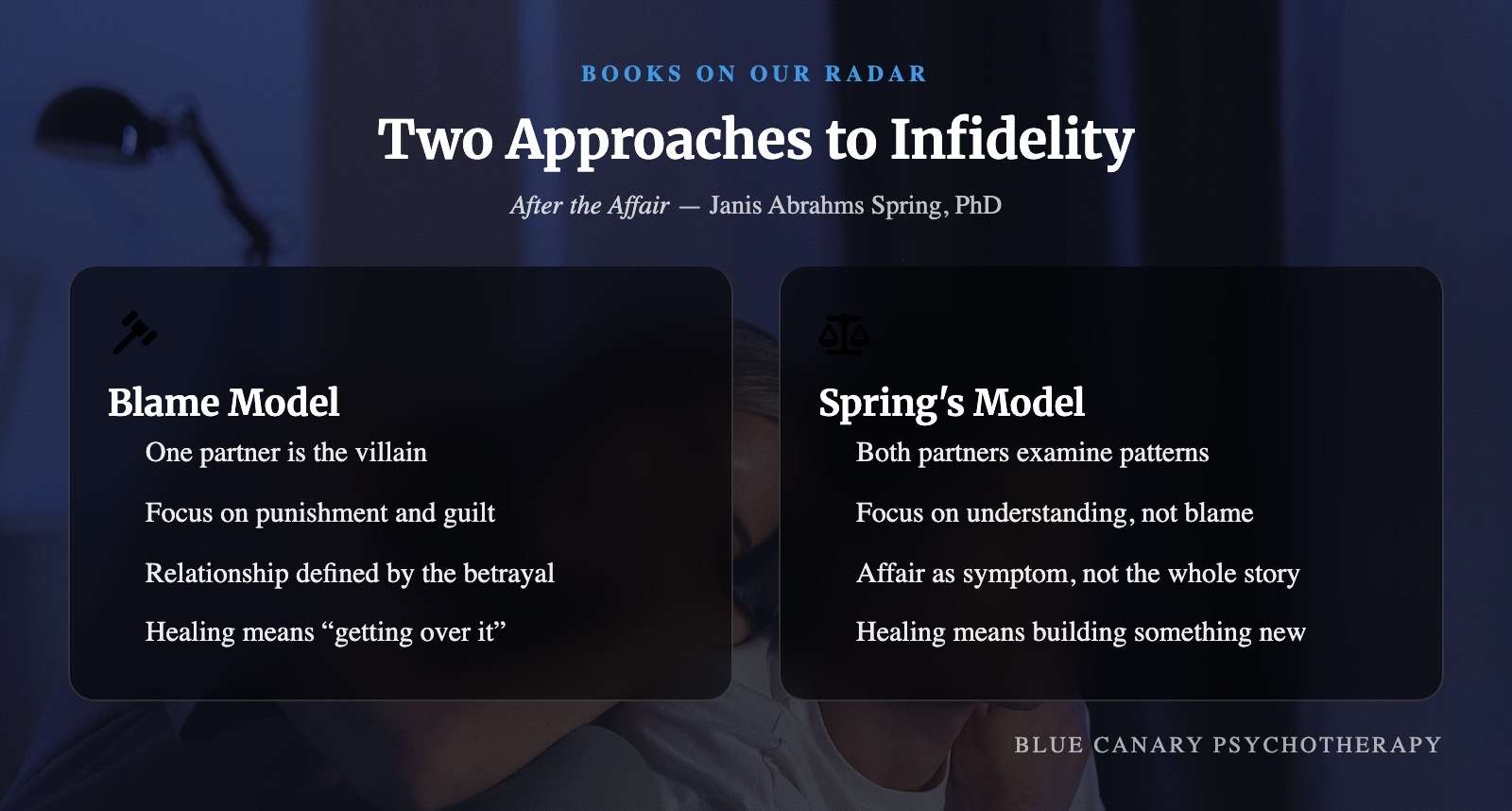
Stage one is about surviving the crisis. This is where she normalizes the wild emotional swings: the obsessive thoughts, the physical symptoms, the impulse to interrogate or flee. She talks directly to both the hurt partner and the unfaithful partner, which is unusual. Most infidelity books pick a side. Spring doesn’t.
Stage two is the decision point. Stay or go? She doesn’t push reconciliation as the default answer. Instead, she walks couples through the factors that actually matter for that decision, including some uncomfortable ones about what was missing before the affair happened.
Stage three is reconstruction. If you’ve decided to stay, this section covers the concrete work of rebuilding trust, looking at the underlying vulnerabilities in the relationship, and figuring out what physical and emotional intimacy looks like now.
What Makes It Different from Other Infidelity Books
The thing that sets Spring’s approach apart is her refusal to cast the unfaithful partner as simply the villain. That’s not the same as excusing the affair. She’s clear that the person who cheated bears responsibility for that choice. But she also asks both partners to look at the relationship honestly, to examine what was working and what wasn’t, without using “you cheated” as a way to shut down every other conversation.
Her framework blends cognitive-behavioral techniques with attachment theory. In practice, that means she gives you concrete exercises (writing out assumptions, challenging distorted thinking) alongside deeper work about what you need from a partner and whether this relationship can actually provide it.
She also gets into the questions people are actually asking but feel too ashamed to say out loud. Can I ever stop picturing them together? What if I stay and regret it? Is it weak to forgive someone who did this to me? What if the affair revealed something real about what I need?
Tools and Takeaways
Some of the most useful elements:
- Structured exercises for both partners, not just the hurt one
- A framework for “earned trust” that’s based on specific behaviors, not just promises
- Guidance on how much detail the hurt partner should ask for, and how much actually helps versus how much makes things worse
- Scripts for the unfaithful partner on how to respond to questions without being defensive or dismissive
- A realistic timeline for recovery, because it’s almost always longer than people expect
What the Book Doesn’t Do
Spring’s background is in heterosexual couples therapy, and it shows. The book defaults to heteronormative frameworks. If you’re in a queer relationship, a polyamorous arrangement, or any structure that doesn’t fit the traditional model, you’ll need to do some translation work. The core principles about trust, honesty, and repair still apply, but the specific examples and assumptions won’t always match your experience.
The 2020 update added material on online affairs and sexting, which helps, but the book still reflects its 1990s origins in places. It doesn’t engage much with trauma-informed approaches or with the growing body of research on how betrayal can produce genuine PTSD-like symptoms.
One thing to be real about: this is a self-help book, not a substitute for working with a therapist. Infidelity recovery is one of the hardest things a couple can attempt, and the emotional intensity usually needs more support than any book can provide on its own. If you’re in the middle of this, couples therapy is worth pursuing alongside reading. For cases where the betrayal has left lasting psychological impact, trauma-focused therapy can help address what the relationship work alone may not reach.
Further Reading
If After the Affair resonates, these related books go deeper into specific aspects of recovery and relationship repair:
- Hold Me Tight: Seven Conversations for a Lifetime of Love by Sue Johnson. The foundational book on emotionally focused therapy for couples. Where Spring focuses on the specific crisis of infidelity, Johnson’s work explains the attachment patterns underneath. Pairs well with After the Affair for couples who want to understand why disconnection happened in the first place.
- Mating in Captivity: Unlocking Erotic Intelligence by Esther Perel. Perel approaches infidelity and desire from a very different angle than Spring. If you’re wrestling with questions about eroticism, attraction, and what monogamy actually asks of people, this is the counterpoint.
- Tell Me No Lies by Ellyn Bader and Peter Pearson. Focuses specifically on honesty and deception in relationships. Useful if the lying itself, not the sexual betrayal, is what’s hardest to get past.
- Conscious Loving: The Journey to Co-Commitment by Gay and Kathlyn Hendricks. Takes a broader look at what committed partnership requires. Less crisis-focused, more about the long-term patterns that either sustain or erode connection.
If you’re working through infidelity and want support beyond what a book can offer, reach out. Recovery from betrayal is real, but it’s rarely something people manage well alone.