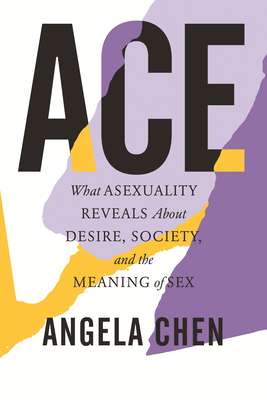
Ace: What Asexuality Reveals About Desire, Society, and the Meaning of Sex
Angela Chen didn’t set out to write the definitive book on asexuality. She was a science journalist (The Atlantic, The New York Times, Wired) when she started reporting on the ace community and realized, somewhere in the middle of all those interviews, that she was writing about herself. That personal reckoning runs underneath the whole book, surfacing at unexpected moments. What could have been a dry cultural analysis ends up with some sharp edges.
Ace: What Asexuality Reveals About Desire, Society, and the Meaning of Sex came out in 2020, and it does something most books about sexuality skip entirely: it treats asexuality as a lens rather than just a subject. Chen’s argument is that the cultural assumption everyone experiences sexual attraction, what scholars call “compulsory sexuality,” doesn’t just harm ace people. It warps how all of us think about desire, relationships, and what counts as intimacy. If you’ve ever felt like your level of sexual interest was wrong somehow, too much or not enough, this book has something to say to you.
Chen mixes memoir with cultural criticism and reported journalism — her own story of discovering her asexuality woven through interviews with dozens of other ace people and a fair amount of sociological analysis. It was a Lambda Literary Award finalist, partly because it made asexuality intellectually serious without turning it into an academic slog.
Compulsory sexuality and who it actually hurts
The core concept Chen builds the book around is compulsory sexuality: the idea that sexual desire is assumed to be universal, healthy, and necessary for a complete life. It’s baked into how we talk about relationships, how we structure marriage, how therapists sometimes pathologize low desire, how we joke about people who “just haven’t met the right person yet.”
If that last line made you flinch, this book is probably for you.
Chen argues that compulsory sexuality creates a kind of invisible pressure most people never examine because it’s just the water we swim in. For ace people, that pressure can be devastating: years of wondering what’s broken, forcing themselves through sexual experiences that felt hollow, hearing from doctors and therapists and partners that they just need to try harder or relax or wait. But Chen’s sharper point is that compulsory sexuality also distorts things for people who do experience sexual attraction. It flattens the range of what desire can look like, turns libido into a metric of relationship health, and makes it really hard to distinguish between actually wanting sex and feeling like you should want it.
That distinction matters a lot in sex therapy, where “I don’t want sex as much as I’m supposed to” is one of the most common things people walk in with. Chen doesn’t write a clinical book, but she names the cultural machinery behind that feeling in a way that’s genuinely clarifying.
Attraction is not one thing
One of the most useful parts of the book is Chen’s breakdown of attraction into distinct categories: sexual, romantic, aesthetic, sensual. Most people lump these together. You see someone attractive, you want to date them, you want to sleep with them. It all gets treated as a single package. The ace community figured out years ago that these are separate experiences that don’t necessarily travel together, and Chen explains that framework with a clarity that benefits anyone trying to figure out what they actually want from another person.
She also gets into how race and disability shape the way asexuality gets perceived. A white woman who doesn’t want sex gets read as “pure.” A Black woman gets read as damaged or resistant. A disabled person gets desexualized whether they want to be or not. These aren’t footnotes in the book; they’re central to Chen’s argument that we can’t talk about sexual orientation without talking about who gets the freedom to define their own relationship to desire.
If you’re working through identity and attraction in queer-affirming therapy, this framework gives you something to work with. It shifts the conversation from “something is wrong with me” toward “what do I actually experience, and what do I want?”
Relationships without the usual script
Chen spends real time on what relationships look like when you remove the assumption that sex is the center of gravity. She writes about ace people in partnerships with non-ace people, with a kind of honesty most couples never get to. She writes about queer platonic relationships — deep, committed, primary partnerships that aren’t romantic or sexual but also aren’t “just friends.” These sections push back against the cultural hierarchy that ranks romantic-sexual relationships above everything else.
This is where the book connects most directly to something like platonic relationship therapy. The idea that a nonsexual, nonromantic relationship can be the most important one in your life still catches people off guard, but Chen makes a convincing case that the hierarchy itself is the problem. If your deepest bond is with a friend you’ve built a life with, the question isn’t “but don’t you want something more?” The question is why we call that “more” in the first place.
The reportage here is strong. Chen lets her interview subjects speak for themselves, and their stories are specific enough to feel real rather than illustrative. You get the sense of actual lives being lived in ways the culture doesn’t have great templates for yet.
What the book doesn’t quite do
The memoir and the cultural criticism don’t always integrate as smoothly as you’d want. There are stretches where Chen is doing solid reported journalism and you find yourself wanting her to come back to her own story, to go deeper into what all this means for her personally. When the interiority does surface, it’s good. There’s just not always enough of it.
This is also a primer and a cultural critique, not a practical guide. If you’re looking for concrete tools for communicating about asexuality with a partner, or clinical frameworks for working through mismatched desire, you’ll need to pair it with other resources. Chen names the problem beautifully. She’s less interested in the how-to.
But that’s also what makes the book valuable on its own terms. Sometimes the most useful thing isn’t a solution. It’s having someone articulate the shape of a problem you’d been feeling but couldn’t describe.
What to read next
If Ace opens up questions about how desire and identity intersect, a few other books on our shelf go in related directions. Polysecure by Jessica Fern digs into attachment theory in non-traditional relationship structures, which pairs well with Chen’s critique of compulsory relationship norms. Gender Outlaw by Kate Bornstein takes a similarly irreverent approach to dismantling categories (gender instead of sexuality, but the same refusal to accept the defaults). And Pleasure Activism by adrienne maree brown picks up the thread of what desire means when you stop letting other people define it for you.
If this book names something you’ve been sitting with, a therapist who gets it can help you sort through what’s yours and what’s just noise. Schedule a consultation here.