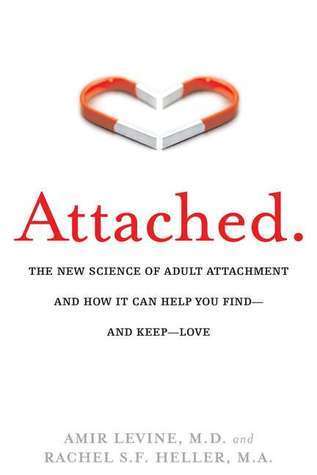
Attached: The New Science of Adult Attachment and How It Can Help You Find—and Keep—Love
If you’ve ever been called “too clingy” or wondered why your partner pulls away the second things get close, someone has probably told you to read this book. “Attached” by psychiatrist Amir Levine and psychologist Rachel Heller basically took attachment theory out of the research lab and handed it to the general public in 2010. It became a massive bestseller. It spawned a whole universe of Instagram infographics about attachment styles. It got millions of people diagnosing themselves and their partners at dinner parties.
Some of that has been genuinely useful. A lot of it hasn’t.
What Pulls People In
The appeal is obvious. Levine, a psychiatrist and neuroscientist at Columbia, and Heller, a social psychologist, break adult attachment into three main styles: anxious, avoidant, and secure. They give you a framework for understanding why certain relationship dynamics keep playing out on repeat. The anxious person who spirals when a text goes unanswered for too long. The avoidant partner who shuts down during hard conversations and needs space — always more space. The secure person who somehow stays calm through all of it.
For people who’ve spent years confused by their own reactions in relationships, that can feel like a revelation. “Oh, I’m not broken. I’m anxious-attached, and my partner is avoidant, and THAT’S why we keep having the same argument.” That flash of recognition is real. A lot of clients walk into couples therapy already speaking this language, and it gives a place to start.
Where It Falls Apart
Here’s the problem. The book oversimplifies attachment in ways that can actually make things worse if you’re not careful.
Attachment isn’t a fixed personality type. It’s contextual. You might show up more anxious with one partner and more avoidant with another. Your patterns shift depending on stress, trauma history, life circumstances, even how your week is going. Reducing all of that complexity to “you ARE anxious-attached” creates a kind of fatalism the research doesn’t support. People change. Patterns shift. That’s the whole point of therapy.
The book is also pretty rough on avoidant attachment. There’s an undercurrent of “just find yourself a secure partner” running through it, which reads less like therapy and more like dating advice. In actual clinical work, avoidant patterns usually have a reason, often rooted in early experiences where emotional independence was the safest option available. Labeling that as the problem isn’t helpful.
And then there’s the biggest gap: disorganized attachment barely exists in this book. Fearful-avoidant attachment, the style most connected to trauma and the one where closeness feels simultaneously necessary and terrifying, gets almost no real treatment. For anyone with a trauma history, that’s a pretty significant hole.
The Framework, Held Loosely
The core concepts do have value when you don’t grip them too tight:
- Protest behaviors: Recognizing that excessive texting, picking fights, or threatening to leave can actually be bids for connection disguised as conflict. Naming the pattern is the first step to interrupting it.
- Deactivating strategies: The avoidant tendency to mentally catalog your partner’s flaws, fantasize about an ex, or pull away after moments of closeness. Not character defects. Protective mechanisms.
- The anxious-avoidant trap: Why these two styles are magnetically drawn to each other and how the push-pull dynamic reinforces both. This is genuinely useful to understand, even if the book doesn’t go deep enough into what to do about it.
- Direct communication: The section on expressing needs clearly rather than through protest behavior is solid practical advice, though it could stand to be about three times longer.
The Instagram Problem
Something “Attached” didn’t intend but definitely enabled: the pop-psychology attachment discourse that’s taken over social media. Reels and TikToks reducing complex relational patterns to aesthetic mood boards. People weaponizing attachment labels against their partners. “My ex was avoidant” becoming shorthand for “my ex was the problem and I didn’t need to examine anything about myself.”
This isn’t really Levine and Heller’s fault, but it’s worth naming because it shapes how people come into therapy. Clients sometimes arrive with a diagnosis for their partner and a clean bill of health for themselves. Part of the work is gently dismantling that framing. Attachment isn’t something your partner has and you don’t. It’s relational. It takes two nervous systems to tango.
What Couples Therapy Does With Attachment
If you bring “Attached” into a therapist’s office, a good couples therapist won’t dismiss the vocabulary. But they’ll expand on it significantly. Attachment in clinical work isn’t a label — it’s a lens. What early experiences shaped how you show up in relationships? What happens in your nervous system when your partner pulls away or gets too close? How does your body respond to conflict before your thinking brain catches up?
For LGBTQ+ couples, attachment shows up in layers the book doesn’t touch. Coming out, family-of-origin rejection, minority stress, sorting out identity within a partnership. All of these shape attachment patterns in ways three tidy categories can’t capture. If you’re looking for a therapist who gets those intersections, find someone with actual lived experience in queer and poly communities, not just a weekend training.
There are also more clinically grounded attachment frameworks worth knowing about. Stan Tatkin’s PACT model (the neuroscience-based approach in Wired for Love), Sue Johnson’s Emotionally Focused Therapy (the foundation for Hold Me Tight), and Jessica Fern’s work on attachment in polyamorous relationships (Polysecure). All three go deeper than “Attached” and are widely used in clinical practice.
Should You Read It?
If you’ve never encountered attachment theory and want a readable introduction, “Attached” does that well. It’s engaging, the self-assessment is a decent starting point, and it’ll give you a shared vocabulary to bring into therapy or conversations with your partner.
But go in with your eyes open. Don’t use it to diagnose your partner. Don’t treat attachment styles as permanent stamps. And if you’re caught in that anxious-avoidant cycle where everything escalates and nothing resolves, a book alone isn’t going to untangle it — that’s what therapy is for. For something more clinically informed, pick up Polysecure (especially for non-monogamous relationships) or Wired for Love for a neuroscience-grounded couples approach.