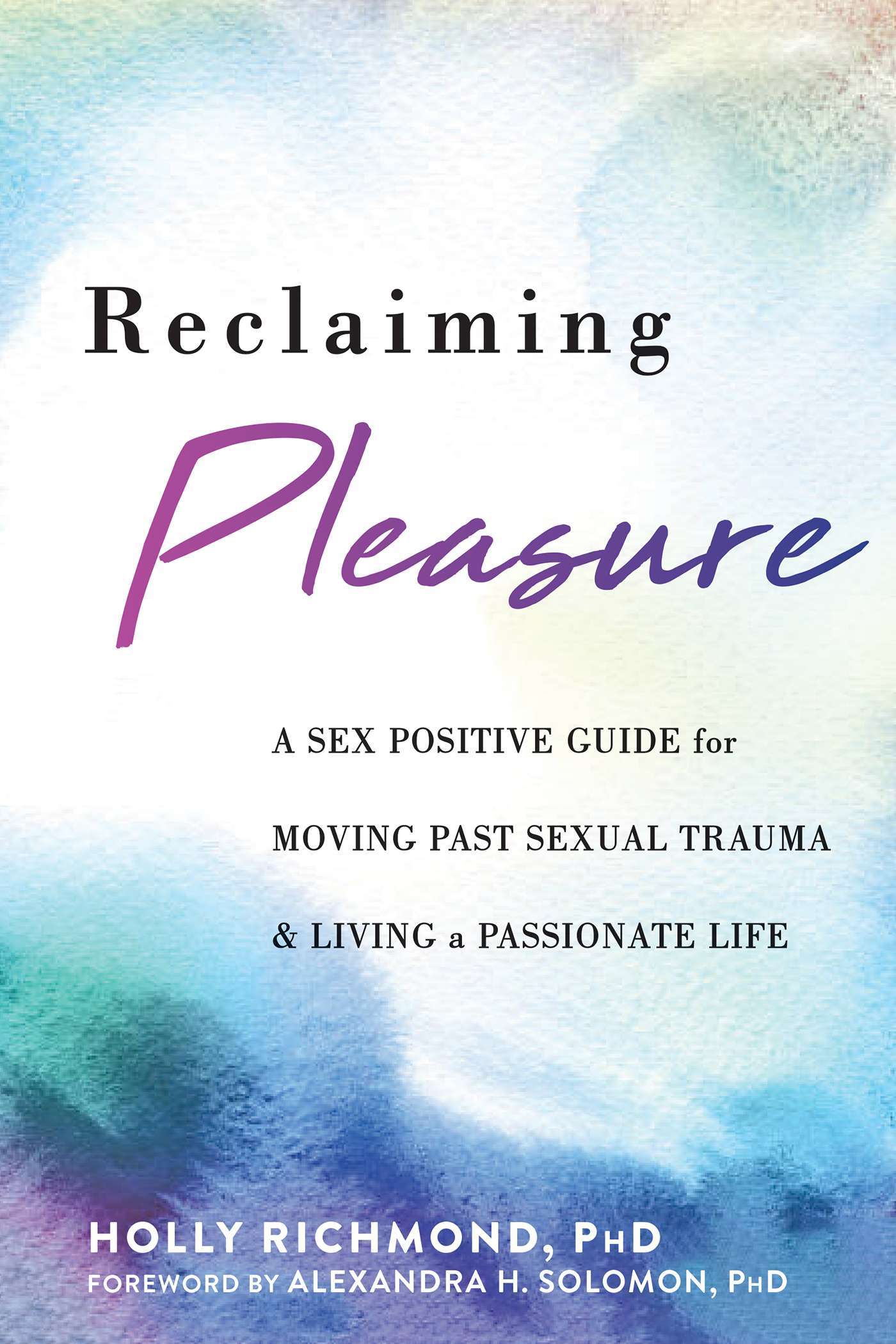
Reclaiming Pleasure: A Sex Positive Guide for Moving Past Sexual Trauma and Living a Passionate Life
If you’ve done the hard work of surviving sexual trauma, gotten through the crisis, started therapy, maybe even feel “fine” most days, there’s a question that doesn’t get talked about nearly enough: what happens to your sex life after? Not whether you can function sexually (that’s a medical question), but whether you can actually want it again. Desire, pleasure, that feeling of being fully present in your body during sex. For a lot of survivors, that part stays stuck long after everything else starts to heal.
That gap between surviving and truly reclaiming your sexuality is exactly where Holly Richmond’s Reclaiming Pleasure lives.
What Does This Book Actually Offer?
Holly Richmond is a somatic psychotherapist, licensed marriage and family therapist, and certified sex therapist, which matters because she’s writing from the intersection of body-based work and clinical sexology. She’s not just a trauma therapist guessing about sex, or a sex educator guessing about trauma. The combination shows up in how the book is structured: it moves from safety and grounding, through reconnecting with your body, all the way to desire, pleasure, and partnered sex.
The book picks up where most sexual trauma recovery resources stop. A lot of books in this space focus on the initial healing: processing what happened, managing triggers, building basic safety. And that work matters enormously. But Reclaiming Pleasure is specifically about what comes next. You’ve done the stabilization. Now what? How do you actually get from “I’m okay” to “I want this”?
That’s a question most survivors are afraid to ask out loud. Richmond gives it a whole book.
The Tools Worth Knowing
The book is built around a progression that mirrors how somatic therapy actually works in practice:
- Developing body awareness and interoception, learning to notice what your body is telling you without automatically shutting down or dissociating
- Building a window of tolerance around sexual sensations, slowly expanding what feels safe rather than pushing through discomfort
- Distinguishing between triggered responses and genuine preferences, because after trauma those wires can get crossed in ways that are genuinely confusing
- Reclaiming desire as something that belongs to you, not something that was taken or damaged beyond repair
What makes these tools different from generic “mindfulness for trauma” advice is that they’re specifically oriented toward sexual recovery. The exercises aren’t abstract. They’re about touch, sensation, arousal, and eventually pleasure. Richmond doesn’t tiptoe around the reality that sexual trauma recovery means actually engaging with sexuality again, on your own terms, at your own pace.
Why the Body Matters Here
A lot of sexual trauma healing happens cognitively: you understand what happened, you process the narrative, you challenge distorted beliefs. All important. But the body holds its own version of the story, and if you only work with thoughts and words, there’s often a disconnect between “I know I’m safe” and “my body believes I’m safe.”
Richmond addresses that gap directly. The somatic exercises walk you through paying attention to what’s happening physically during intimate moments, not to judge or fix it, but to start rebuilding a relationship with your own sensory experience. That might mean noticing where you hold tension when someone touches you. Or recognizing the difference between a freeze response and simply not being in the mood.
This is also why the book works well alongside body-based therapy. The exercises give you something to practice between sessions, and the framework helps you make sense of what your body is doing even when your mind says everything should be fine.
What It Gets Right and Where It Has Limits
The focus on pleasure as a legitimate goal, not just symptom reduction, is what sets this apart. Too many trauma resources treat sex like something to tolerate again. Richmond treats it like something to want again. That reframe matters.
On the limits side: the book is primarily oriented toward cisgender heterosexual women. Richmond does acknowledge other identities, but the examples and exercises lean in that direction. If you’re queer, trans, kinky, or in non-monogamous relationships, you may need to adapt some of the material. The core principles translate, but it’s worth knowing going in.
The book also assumes a certain baseline of trauma processing. If you’re still in the acute phase of recovery, this probably isn’t the right starting point. Start with stabilization work first, then come back to this when you’re ready to focus on pleasure and desire specifically.
Who Should Read This (and When)
This book is most useful if you’ve already done some trauma work and are now dealing with the “what now” of your sex life. You’re past the crisis. You’re not in active flashbacks. But desire still feels distant, or sex feels like something you go through rather than something you’re present for.
It’s also useful for partners of survivors. Not as a how-to guide for “fixing” the situation, but as a way to understand what the recovery process actually looks like from the inside. The section on rebuilding partnered intimacy gives both people in a relationship something concrete to work with.
If you haven’t started trauma processing at all, this isn’t where to begin. And if your primary issue is relationship dynamics rather than trauma, other books will be more directly useful.
Pairing This Book With Therapy
A book like this works best when you’re not going it alone. The exercises are designed to be done at your own pace, but having a therapist in your corner, someone who understands sexual recovery and body-based approaches, can make the difference between productive healing and accidentally pushing past your window of tolerance.
If you’re looking for a therapist to work alongside this book, look for someone trained in somatic approaches who’s comfortable talking about sex directly. Not all trauma therapists are. And if you’re queer, trans, in a kink dynamic, or in a non-monogamy, you’ll want someone who can hold those layers without needing a primer first.
What to Read Next
If Reclaiming Pleasure speaks to where you are, a few related books worth exploring:
Healing Sex by Staci Haines takes a similar somatic approach but from a more explicitly activist and queer-inclusive perspective. If you want a complement that centers different bodies and identities, start there.
Come as You Are by Emily Nagoski provides the science behind sexual response: the accelerator-and-brake model, responsive vs. spontaneous desire. It helps make sense of why trauma disrupts sexuality the way it does.
Whole-Body Sex goes deeper into somatic sex therapy for anyone interested in the body-based approach to sexual healing and embodiment.