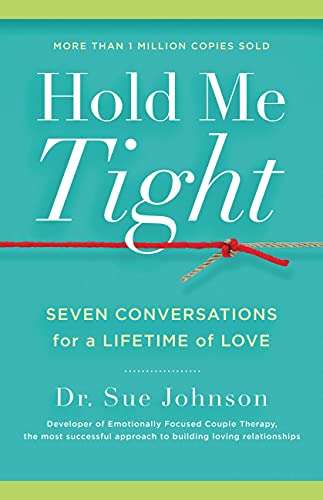
Hold Me Tight: Seven Conversations for a Lifetime of Love
In the chaos of New York City life, where relationships get squeezed by cramped apartments and brutal work schedules, connecting with your partner can feel like one more thing you don’t have time for. Dr. Sue Johnson’s “Hold Me Tight” offers a different way to understand and strengthen romantic bonds, one that’s especially useful for NYC couples dealing with their particular brand of relationship stress.
For a lot of New Yorkers, couples therapy is a real investment in relationship health. Many couples find that professional guidance gives them a structured space to work through complicated dynamics. Johnson’s book works both as a complement to formal therapy and as a resource for couples who want to strengthen their emotional connection on their own.
The Attachment Revolution in Couples Therapy
At its core, “Hold Me Tight” introduces Emotionally Focused Therapy (EFT), Johnson’s approach to couples therapy that has shown impressive success rates. Unlike traditional marriage counseling that zeros in on communication techniques or conflict resolution skills, EFT goes after the emotional bond between partners.
Johnson’s central insight is simple but powerful: adult romantic relationships work a lot like childhood attachment bonds. We need our partners to be emotionally available, responsive, and engaged, just like we needed our caregivers when we were young. That shift in focus, from “fixing problems” to strengthening the emotional connection that helps couples handle whatever comes, is a big deal.
For New Yorkers constantly packed into crowded spaces with limited privacy, understanding this attachment need becomes even more important. The book helps explain why small apartments can amplify relationship tensions and why carving out moments of genuine connection amid packed schedules matters as much as it does.
Breaking Free from “Demon Dialogues”
Johnson identifies common negative interaction patterns she calls “demon dialogues” that trap couples in cycles of disconnection. These will feel instantly familiar:
- The pursue-withdraw dance (one partner chases while the other pulls away)
- Finding the bad guy (blaming and finger-pointing)
- Protest and distance (emotional shutdown)
These patterns often get worse under the weight of commutes, work demands, and zero personal space. Johnson gives clear guidance for spotting these cycles in your own relationship and, more importantly, how to step out of them.
The Seven Conversations
The heart of the book lays out seven structured conversations designed to help couples build and maintain secure emotional bonds. Each one builds on the last:
- Identifying negative patterns
- Finding the raw spots (emotional triggers)
- Revisiting difficult moments with new understanding
- Learning to ask for comfort and connection
- Healing relationship injuries
- Enhancing physical intimacy
- Keeping your love alive
These conversations give a clear structure for New York couples looking for marriage counseling, whether for already-good relationships that could use some deepening or for more serious issues. The book offers something couples can work through together between sessions.
Real-World Application in NYC Relationships
Johnson illustrates her concepts with detailed case examples that make the abstract feel real. Reading about these couples, you’ll probably recognize pieces of your own relationship dynamics.
For New Yorkers, the book’s emphasis on creating “safe haven” moments hits home. In a city where external stressors pile up, from loud neighbors to subway breakdowns, learning to turn toward each other instead of away becomes essential.
The book offers practical suggestions for creating connection even when time and space are tight: brief check-ins during the day, intentional physical touch, and small rituals that build a sense of security.
Critical Perspectives Worth Considering
For all its strengths, “Hold Me Tight” has some real gaps. The book leans heavily on heteronormative examples that don’t represent the full range of relationships. While Johnson does include some same-sex couples, the book could do a much better job addressing what LGBTQ+ couples or those in non-monogamous relationships actually face.
Some readers also note that doing the conversations without a therapist’s guidance can be tough. The emotional vulnerability involved might feel like too much without professional support, especially when you’re dealing with deep-seated stuff. For New Yorkers already running on fumes from high-stress environments, that extra emotional labor deserves careful thought.
About Dr. Sue Johnson
Dr. Sue Johnson developed Emotionally Focused Therapy and has spent over 25 years researching how well it works. As the founder of the International Centre for Excellence in Emotionally Focused Therapy, she’s trained thousands of therapists around the world. Her approach is backed by solid clinical research, with over 70% of distressed couples showing significant improvement after EFT treatment.
Making the Most of “Hold Me Tight”
For couples considering this book:
Go in with realistic expectations. The conversations take time, privacy, and emotional energy, all of which are in short supply in city life. Think about scheduling dedicated sessions when you won’t be interrupted by roommates, work calls, or anything else.
The book works well as preparation for couples therapy and as a supplement to ongoing sessions. Plenty of NYC therapists recommend it to clients between appointments to keep the momentum going.
Beyond “Hold Me Tight”
For those who want to dig deeper, check out “Attached” by Amir Levine and Rachel Heller for more on attachment styles, or “The State of Affairs” by Esther Perel for a take on modern relationships that’s especially relevant to cosmopolitan NYC couples.