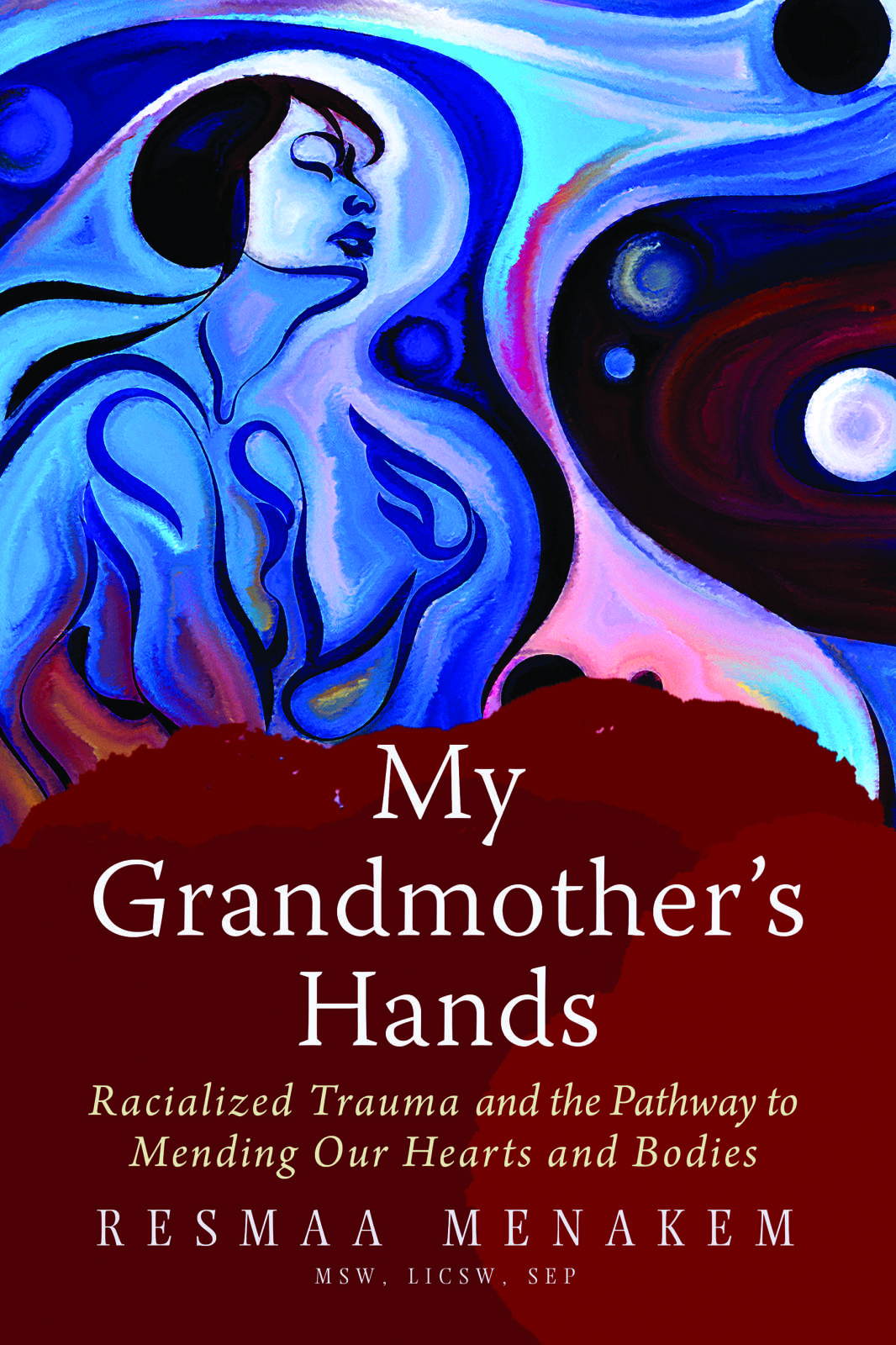
My Grandmother’s Hands: Racialized Trauma and the Mending of Our Bodies and Hearts
Trauma lives in our bodies. That’s not a metaphor – it’s what Resmaa Menakem spends this whole book showing you. Racial trauma doesn’t just affect our minds. It gets into our nervous systems, our muscles, our reflexes. And it gets passed down through generations in ways most of us never learned to recognize.
Understanding Trauma Through Our Bodies
Menakem introduces the concept of “white body supremacy” – the idea that racism isn’t just in our thoughts or our institutions, but in our actual physical responses. He shows how historical trauma from slavery, violence, and oppression continues to shape how bodies react today. The writing is accessible and grounded in real examples, helping you see how trauma responses like tension, anxiety, and fight-or-flight get triggered in racialized interactions.
Practical Tools for Healing
The book is full of exercises for “settling” the body and becoming more aware of your own trauma responses. These include breathing techniques, mindfulness practices, and movement exercises you can try at home or bring into therapy. The focus is on building your capacity to stay present with difficult sensations rather than getting overwhelmed by them.
Important Critiques to Consider
The book has drawn real criticism, and it’s worth knowing about. Menakem suggests police can reform through trauma healing and self-care practices – a view that feels overly optimistic given the systemic nature of police violence. His use of terms like “yellow bodies” and “red bodies” for Asian and Indigenous people has also been called out as problematic. Some passages also contain fatphobic language around weight and health.
About the Author
Resmaa Menakem is a trauma therapist whose brother serves as a police officer. He has worked extensively with police departments on trauma training. This background shapes his perspective on police reform in ways that differ significantly from abolition-focused approaches – something worth sitting with as you read.
Reading This Book in Therapy
This is a book worth reading slowly, ideally alongside therapy. The somatic exercises are meant to be practiced, not just read about, and the material around intergenerational trauma can hit hard. Be gentle with yourself. If the sections on policing feel triggering or unhelpful, skip them.
Additional Reading Recommendations
For more on trauma and the body, “The Body Keeps the Score” by Bessel van der Kolk and “The Politics of Trauma” by Staci Haines both offer different angles on embodied healing without some of this book’s limitations.